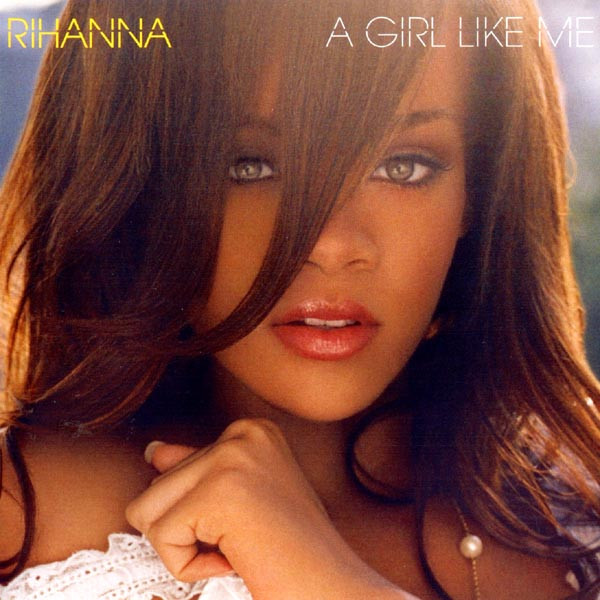
Less than a year after Rihanna’s “Music of the Sun”, the mainstream landscape was becoming increasingly difficult for newly introduced acts. While album sales continued to decline, the market increasingly favoured artists who already possessed either a well-established audience or a clearly identifiable brand. Additional signs of a single-based economy were starting to hint at a new transformation.
By 2006, three distinct paths were emerging. The first belonged to established stars such as Madonna, Justin Timberlake and Shakira. Having spent years building loyal audiences, they could convert successful singles into album sales more easily than newer acts. The more established artists reclaimed dominance over global album charts, while previously promoted teenage acts became less central. Their public image was already understood, reducing the need to constantly reintroduce themselves with each release.
The second path was increasingly occupied by the new generation of Disney and Nickelodeon performers. Their music careers benefited from pre-existing visibility among the youngest audiences, allowing them to enter the market with a level of recognition that most new artists lacked.
Finally, artists such as James Blunt and Amy Winehouse demonstrated that there remained a substantial adult audience willing to purchase physical albums. Their success suggested that mainstream music was becoming more diverse than the youth-oriented model that had dominated previous years.
At the same time, several of the trends that had defined the first half of the decade were beginning to lose momentum. The crunk&b wave that had propelled artists such as Ciara was becoming less dominant, while the minimalist R&B associated with Ryan Leslie struggled to produce durable stars. Acts such as Cheri Dennis failed to establish themselves despite strong industry backing, while others found it increasingly difficult to replicate their initial success. The market was becoming less receptive to artists built around a single prevailing trend.
Rihanna occupied none of these positions. She was not a completely established act, she did not benefit from a Disney-style media machine, and she was not marketed towards adult listeners. Although “Pon de Replay” had given her a major hit, it had not yet provided her with a clearly defined public identity. The challenge of “A Girl Like Me” was therefore not simply to produce another successful single, but to transform Rihanna from a successful song into a recognisable artist.
In that sense, Rihanna and her team understood the assignment fast. Rather than the re-release that was discussed at the time, they moved to a second era, with a dance-pop leading hit. The pivot seems quite different, moving on from “Pon de Replay”. Because she only had that hit under her belt, it was still possible to present another version of her music. The audience showed it was more attached to her first high-charting single than to her persona: they did not completely follow her with “If It’s Lovin’ That You Want”.
The lead single “SOS” is based on a sample of Tainted Love, a song that has proven to be infectious, and the loop creates a sense of urgency in the track. Paired with Rihanna’s commanding vocal delivery, the song became once again a hit in major markets. In the video, they experiment with a slightly more fashion-forward version of her image yet retain a few shots with the teenage girl-next-door image.
The track had initially been offered to Christina Milian, who reportedly declined it out of concern that it would alienate her R&B audience. At the same time, Teairra Mari’s commercial underperformance led Def Jam to recalibrate its priorities. Both artists would soon be released from the label, placing greater emphasis on Rihanna and Ne-Yo as their most reliable chart performers.
“A Girl Like Me” presents Rihanna in a slightly new light. The image is still the same teenage girl, but they focus more on a personal identity and less on her ethnic heritage. The aim is to have her represent more than the “island girl” on American tracks. It is part of her identity, but she has idiosyncrasy that shows throughout the vocal delivery of this album.
Visually and conceptually, Rihanna was reframed rather than entirely reinvented. The “girl-next-door” image was maintained but further stylized, still filtered through a Caribbean sensibility. The album’s booklet, featuring her dressed in white across various looks, presents a version of teenage femininity that resonates with urban, diasporic identities, particularly in cities such as New York or London. This positioning allows her to remain relatable while subtly expanding her audience.
Despite the short gap between releases, the album attempts to present a slightly more mature version of Rihanna. This shift is particularly significant within a changing teen pop landscape increasingly dominated by Disney and Nickelodeon figures, while other young artists aged into more controversial public images. Rather than reverting to a more overtly youthful presentation, Rihanna occupies a more ambiguous space: teenage but not infantilized. This is further shaped by racial dynamics, as Black teenage artists are often perceived as older than their actual age.
Most of the fillers of the album still ride the wave of the Caribbean but the sound of tropical flavoured-R&B is replaced by a sunny reggae pop for most of the album. However, the three singles do not represent that sound in the slightest way: “SOS” is the dance-pop track discussed earlier, “Unfaithful” is an R&B-ballad penned by Ne-Yo, and “We Ride” is an R&B-pop midtempo with a soft vocal delivery. “Break It Off”, a dancehall-pop song with Sean Paul was released as a radio single late in the rollout and reached the top ten of the most demanding market without a video, which is unique enough to be noted.
Lyrically, this results in a careful balancing act. Songs like “Final Goodbye” introduce themes such as grief without relying on the simpler tropes of her debut, while tracks like “Crazy Little Thing Called Love” maintain the perspective of a teenage girl navigating infatuation. Although still written largely by older male songwriters, the material aims to position her within a narrow lane: youthful, yet credible enough to retain young adult listeners.
The album’s defining moments, remain its singles. “SOS” capitalizes on nostalgia while firmly embedding itself within mid-2000s electronic pop, enabling Rihanna to expand her reach, particularly in European markets.
In contrast, “Unfaithful,” written by Ne-Yo, introduces a more dramatic and emotionally complex ballad form typically associated with older performers. Despite questions about the alignment between subject matter and her age, the track demonstrates her ability to convincingly carry a ballad, reinforcing her vocal credibility. Nonetheless, the material comes out as the least adapted to her persona, at least in imagery. The aim was clearly to convince another type of listener to gravitate towards her project.
Both singles achieved global success, confirming that Rihanna was not a one-hit wonder. Within a remarkably short timeframe, she accumulated multiple international hits, establishing a level of momentum and consistency that was uncommon for a newly introduced artist.
“We Ride”, chosen as the third single because it was the most downloaded song on the album failed to replicate the success of the two first singles, but its aim was to consolidate the audience she was creating. The video pushed on the girl-next-door with simple everyday scenes for teenagers, glamourised, but relatable.
Conversely, “Break It Off,” featuring Sean Paul, reached the top ten without a music video, a relatively rare achievement at the time. By accumulating hits at this level, Rihanna demonstrated her ability to reach a broad global audience through her persona and distinctive vocal tone alone.
With this album, Rihanna secured a global hit and a few moderate ones, but her image was not completely engrained in the mind of most casual listeners. They knew the songs; they did not know her. The hesitation on the version to present to the public makes this an album of transition as she was not yet anchored into one specific persona. In addition, the difference between the hit singles and the rest of the project created a difficulty in convincing people that she was also an albums’ artist. By then she was not the one-hit wonder but a several hit wonder to most.
However, her label understood that her velocity was an asset, this became a form of strategy: release music and content fast for the audience to grow. Other female pop acts would later replicate this strategy (Ariana Grande for example). “A Girl Like Me” also expanded her international aura, with a stronger base of listeners in Europe and specifically in the UK.
Rihanna – Music of the Sun
Rihanna – A Girl Like Me
Rihanna – Good Girl Gone Bad
Rihanna – Rated R


Leave a Reply