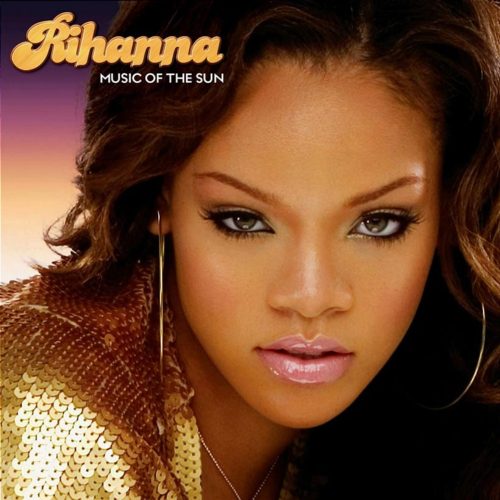
In 2005, success was still measured primarily through purchases rather than consumption. Labels were trying to convince audiences to buy singles and albums, whether physically or through emerging digital platforms such as iTunes. Marketing strategies were therefore built around the act of purchase itself.
For decades, one demographic had occupied a central place within this system: teenagers. From the 1960s onwards, they represented one of the most reliable consumer groups for mainstream music, purchasing records, magazines, merchandise, and concert tickets. Labels increasingly searched for artists capable of generating interest among teenagers.
Yet by the mid-2000s, this vision was beginning to show signs of exhaustion. Album sales declined year after year, weakened by file-sharing and changing consumption habits. While teenagers remained an important audience, the industry’s continued fixation on them increasingly overlooked the diversity of consumers still participating in the market. Radio remained a mass medium reaching multiple generations, and older audiences often maintained stronger purchasing habits than younger listeners, who were generally more familiar with file-sharing technologies. The continued perception of teenagers as the primary economic engine of popular music therefore reflected assumptions inherited from previous decades more than the realities of the market at the time.
In this context, major labels sought to reduce risk. At Def Jam, this translated into a diversified strategy. Teairra Mari was positioned within contemporary urban R&B, while Ne-Yo offered both commercial potential as a singer and publishing value as a songwriter. Rihanna was set to occupy a narrower space. Marketed through a Caribbean-inflected image and sound, she entered a lane that had received relatively little attention from major labels since Diana King. While limited in size, Caribbean communities in cities such as New York, London, and Paris offered the possibility of a pre-existing audience capable of providing an initial foundation for a new act.
Rihanna’s initial positioning reflected the niche Def Jam had identified for her. Marketed through her Barbadian background, she was primarily aimed at a young Caribbean and Caribbean-diasporic audience. While limited in size, this audience offered a foundation from which a broader career could potentially develop. At a time when Sean Paul had already demonstrated that dancehall-inflected music could move beyond its core audience and find success in urban clubs and mainstream markets, the possibility of crossover was no longer purely theoretical.
To construct this positioning, Rihanna worked with Carl Sturken and Evan Rogers on a brighter and more accessible interpretation of Caribbean music. Her ethnicity became the principal point of entry into the project. Although heavily curated, the album sought to assemble different Black Caribbean influences through the perspective of the sixteen-year-old she was at the time of its release. This direction was already visible in the six-track demo used to shop her to labels, which included the dancehall-inflected “Pon de Replay”.
The sound of “Music of the Sun” oscillates between dance-oriented tracks such as “Pon de Replay,” “Let Me,” and “Rush,” a softened pop-Caribbean approach heard in “If It’s Lovin’ That You Want,” and a smaller set of ballads like “The Last Time” and “Now I Know.” Despite this variation, the album achieves coherence through a shared sub-sonic palette defined by warmth and rhythmic lightness.
This coherence is supported by a vocal identity that is already distinct. Rihanna’s slightly nasal tone and direct delivery stand apart from the more polished, technically trained vocal styles that dominated the post-1990s landscape. Her approach feels less rooted in gospel or classical traditions and closer to a self-developed technique. The cover of “You Don’t Love Me (No, No, No)” places her within a reggae lineage, showcasing her vocal flavour on a track that foregrounds her musical background and rhythmic sensibility.
While limited in number, the ballads play a strategic role in aligning the album with familiar Anglo-American R&B conventions of 2005, enhancing its accessibility in a market less exposed to the sonic variety present elsewhere. However, their relative decline in listenership over time underscores how the album’s lasting identity resides primarily in its Caribbean-inflected tracks.
Songs like “Music of the Sun” emphasize lyrical lightness, and most of the album favours feel-good emotions over dramatic or introspective themes. On “Willing to Wait,” the narrative centres on the anticipation of a first kiss, while “There’s a Thug in My Life” revisits the familiar trope of the “good girl” drawn to a “bad boy.” These tracks remain within expected thematic boundaries, reinforcing the album’s positioning as a youthful and accessible project.
The rollout for “Music of the Sun” was notably brief, with only two proper singles pushed to radio and television. While “Pon de Replay,” supported by a simple club-oriented video, propelled Rihanna to a number two hit, “If It’s Lovin’ That You Want” failed to sustain the momentum generated by the debut single. Its accompanying video, though still attempting to convey a Caribbean atmosphere, was shot in the United States, resulting in a more artificial than rooted sense of place.
The album established a form of presence for Rihanna, while simultaneously leaving open the question of her longevity as an artist. The perception of her as a potential one-hit wonder can be partially attributed to the limited resources allocated to the promotion of both the singles and the album. Despite these constraints, she managed to deliver a major hit with “Pon de Replay,” which directly competed with Mariah Carey’s “We Belong Together”. At one point, Rihanna was within reach of the number one position, before Carey’s team reinforced their hold through strategic discounting, allowing the latter to secure the top spot.
Rihanna – Music of the Sun
Rihanna – A Girl Like Me
Rihanna – Good Girl Gone Bad
Rihanna – Rated R



Leave a Reply