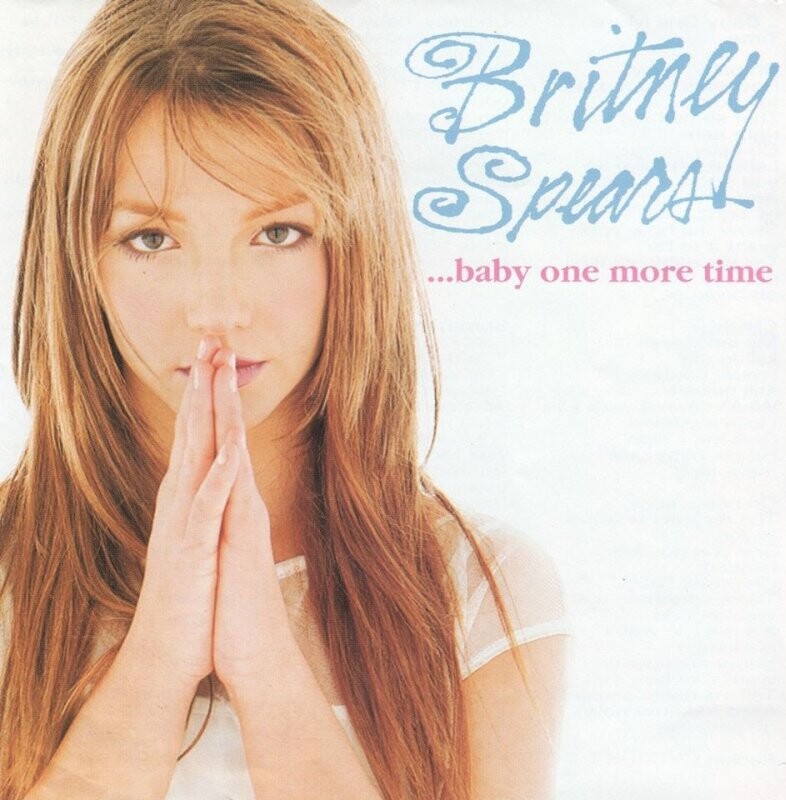
…Baby One More Time – The Blueprint
Before 1998, the teen pop industry already existed, but it was structured primarily around male acts. Boy bands occupied the centre of the market, and their success was built on the consumption habits of teenage girls. The industry understood that teenage girls were a powerful audience, but it did not yet fully trust them as consumers capable of identifying with a female figure placed at the centre of the narrative. When girl groups such as the Spice Girls achieved global success in 1996, the industry reacted by attempting to replicate that model, often pushing young women into group formats with uneven outcomes. The Spice Girls demonstrated that teenage girls would support women when given the opportunity. Britney Spears would demonstrate something more specific: teenage girls would support another girl, slightly older than themselves, when she was framed as both aspirational and accessible.
Britney Spears entered the market as a solo artist with a fully formed identity. This was a decisive shift. Unlike many acts of the time, she was not introduced gradually or tested regionally. She arrived as a complete product, supported by a machinery capable of accelerating visibility at unprecedented speed. In the early weeks of her career, the industry attempted to position her as a conventional pop singer, foregrounding her vocals alongside choreography and performance. Very quickly, however, it became clear that what captivated audiences was not vocal prowess in the traditional sense but physical presence. Britney’s command of movement, her precision as a dancer, and her ability to inhabit choreography became the defining elements of her appeal. The industry adjusted accordingly.
The single “…Baby One More Time” was released in 1998, but its commercial impact unfolded over time. While it became a hit upon release, it reached its peak as the biggest-selling single of 1999. This delayed saturation contributed to Britney’s rapid transformation into a recognisable global figure. She was omnipresent within a year, not because of gradual artistic development, but because the system surrounding her was built to amplify exposure quickly and relentlessly. The album itself was met with mixed to negative critical reception. Critics struggled to understand the purpose of a teen pop album and evaluated it through frameworks that were not designed for the genre. The question was not whether the album succeeded artistically, but whether the industry had clearly defined what teen pop was meant to do.
The Catholic school uniform in the “…Baby One More Time” video is often described as a label imposition, yet it was Britney’s own idea to move away from an animated concept and toward something else. The choice allowed her to foreground her abilities as a dancer and performer. At the same time, it produced immediate controversy. The imagery aligned her with a Lolita archetype that should have provoked deeper institutional concern than it did. The problem was never the concept itself, but the way it was received and framed. Britney was not intended to be sexualised in the manner that followed, yet the image invited a gaze that the industry did little to regulate.
In response to this discomfort, a narrative emerged around Britney’s virginity. Virginity, a social construct, became a tool of reassurance. It allowed parents, who acted as gatekeepers of consumption, to feel that the content their children consumed remained morally contained. This contradiction reveals the expectations placed on young female performers at the time. Britney could appear flirtatious, even provocative, while being required to verbally assert innocence. The image and the discourse were allowed to diverge as long as the illusion of control was maintained. This dynamic says less about Britney as an individual and more about the cultural anxieties surrounding young women’s visibility.
Musically, the album adheres to the conventions of bubblegum pop, shaped largely by European production. Max Martin, who had previously worked with the Backstreet Boys, played a central role in defining the sound. The polished, synthetic quality of the album aligns it with a transatlantic pop tradition rather than a distinctly American one. Notably, Martin’s first number one on the Billboard Hot 100 came with Britney’s debut single. This underscores the extent to which Britney functioned as a catalyst within the industry. Her success validated a sound that would dominate pop for years.
Lyrically, the album remains deliberately safe. The emotions expressed are straightforward, even simplistic, and avoid explicit complexity. This safety created an important precedent. Britney’s image could suggest flirtation, while the lyrical content remained youthful and non-threatening. This gap between image and text allowed the industry to market her as acceptable. It also created space for future female artists to navigate a similar balance, where visual performance could suggest transgression while lyrics maintained innocence.
In the immediate aftermath of controversies surrounding manufactured pop acts and lip-syncing scandals earlier in the decade, there remained pressure on new artists to demonstrate vocal credibility. Britney’s debut therefore presents a fuller and less stylised vocal performance than many of her later records. Yet audiences ultimately responded less to technical singing than to performance itself. As Britney’s image solidified, her vocals became increasingly shaped around the maintenance of that image rather than around vocal display.
At the same time, the album’s lyrics were written largely by men, reflecting what adult male songwriters imagined the emotional life of a seventeen-year-old girl to be. This contributed to the construction of Britney as naïve, a perception that would follow her throughout her career. The simplicity of the emotional vocabulary became conflated with simplicity of character. Britney’s intelligence, discipline, and awareness were obscured by a persona built to be easily consumable.
Britney’s background played a role in her reception. Coming from the Bible Belt, she was legible to what industry executives referred to as “middle America.” The focus on her morality, her family values, and her perceived wholesomeness reinforced this legibility. At the same time, the European production style allowed her music to circulate far beyond the United States. The album’s global success, reaching at least twenty-five million sales worldwide, positioned her as an international figure from the outset. She was both deeply American in image and distinctly global in sound.
The …Baby One More Time era established a blueprint that would be replicated repeatedly. Britney became the model for teenage girl pop stardom. Her image, styling, and performance language were imitated by nearly every young female artist who followed. The structure she embodied remains visible decades later. What this era ultimately represents is not simply the launch of a career, but the invention of a market. Britney Spears made visible a space between children’s music and adult pop, a space where girls could see themselves reflected. At the same time, she entered that space without authorship or protection. The conditions that enabled her success also laid the groundwork for the limitations that would follow.
 Elemental Emancipation
Leave a comment