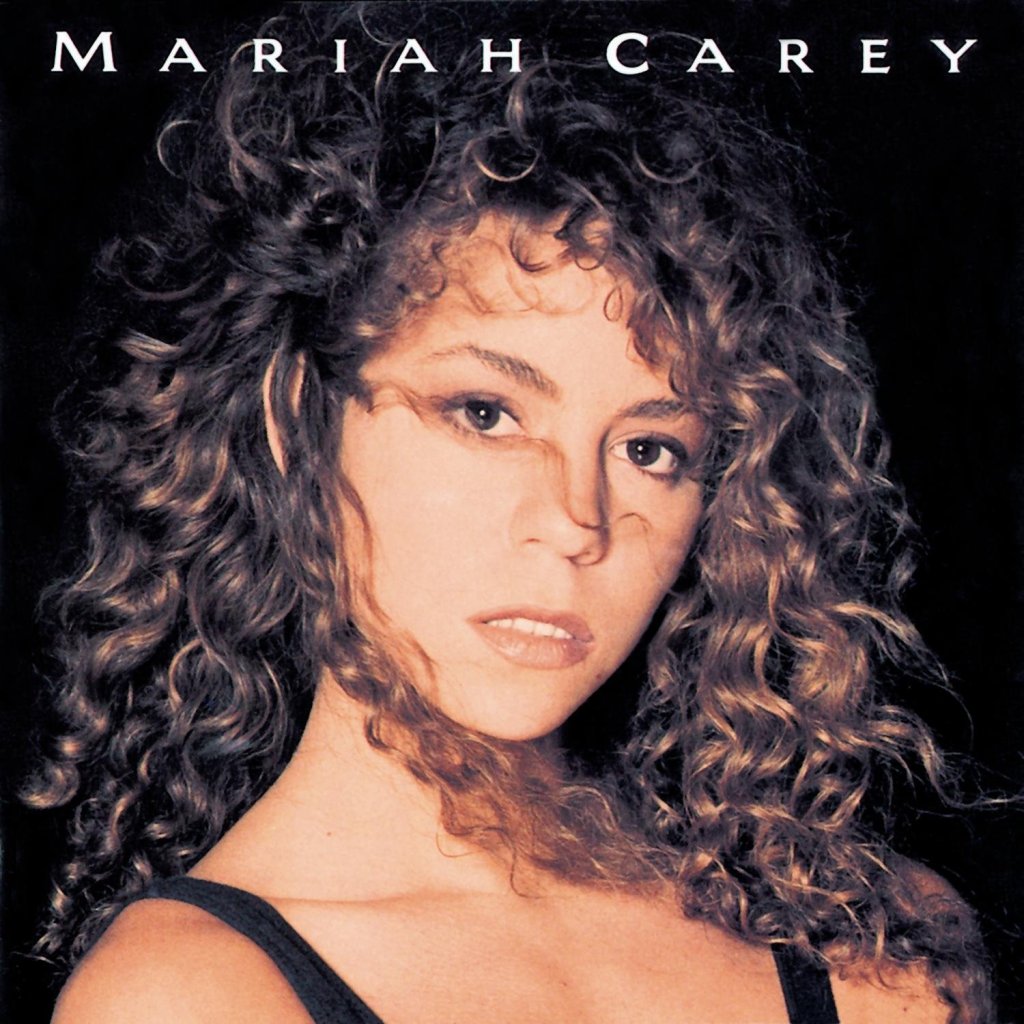
Mariah Carey recalibrated the climate when she debuted. By 1990, mainstream pop was carrying a credibility problem. The final years of the 1980s had created growing suspicion around authenticity. Heavy production, synthesizers, and increasingly elaborate studio techniques often shifted attention away from the performer and towards the recording itself. The Milli Vanilli scandal only intensified those concerns. If audiences could discover that the voices on a record did not belong to the people presented on stage, then trust in pop performance itself became fragile.
Several commercial lanes already existed. Rock ballads remained successful, dance-pop continued to dominate radio, and new jack swing was emerging as a major force within Black music. Yet among the major female performers of the period, Whitney Houston occupied a relatively unique position. Her success had demonstrated that technical vocal ability could still function as a commercial asset in mainstream pop, even if many of her biggest hits remained rooted in dance-pop and contemporary production trends.
Into that atmosphere came Mariah Carey.
When “Vision of Love” arrived, it did not simply showcase a remarkable singer. It presented a performer whose authority rested on both voice and authorship. The vocal performance immediately attracted attention. The songwriting helped sustain it.
The voice remains the album’s most obvious innovation. “Vision of Love” expands into vocal architecture: runs, melisma, phrasing, dynamic shifts, and the now legendary whistle register. This was not simply range. It was design. Where many pop singers remained within a relatively stable register, Mariah stretched vocal lines across multiple spaces. Her ornamentation did not feel disconnected from the song. It became part of its structure.
Even the whistle tones rarely functioned as spectacle. They appeared more as punctuation than exhibition. The effect was one of clarity rather than excess. It felt like something the industry had forgotten but still wanted.
The influence of that approach would become difficult to overstate. While virtuosic singers had always existed, Mariah helped popularise a style in which vocal ornamentation became part of mainstream musical language. Across the following decade, singers working in pop, R&B, gospel, and talent-show traditions would absorb elements of her phrasing and technique.
Yet the sound of Mariah Carey cannot be reduced to the voice alone.
The album does not sit comfortably within a single genre. Pop structures coexist with R&B inflections, gospel phrasing, and occasional touches of jazz. “Vision of Love” leans spiritual. “Vanishing” leans jazz. Elsewhere, the album moves comfortably between traditions without fully committing to one of them. Mariah was already shaping a centre capable of holding the different genres she would continue to blend throughout her career.
The songwriting was equally important to that process. Every track on the album carries at least Mariah Carey co-writing credit. Although public discussion frequently centred on the voice, her pen played a fundamental role in establishing the project’s authority. In an industry that often felt more comfortable presenting women as interpreters than creators, that distinction mattered.
The songs felt personal.
The lyricism is melodic, ornamental, and precise. The melodies themselves often mirror the flexibility of her vocal approach, expanding and contracting with the same sense of movement heard in her phrasing. This was its own form of poetry. The fact that it came from her pen made it read as authentic.
Mariah had grown up around Black musical traditions and carried into pop an expectation that was common across many singer-songwriter and urban spaces: if you had something to say, you wrote it yourself. There was not yet the direct hip-hop influence that would become central to later phases of her career, but the foundation was already present. The combination of vocal performance and authorship was becoming part of her artistic identity.
Yet the control was not entirely hers.
Behind the debut stood Columbia’s machinery and Tommy Mottola’s oversight. That dynamic was not uncommon for a launch of this scale, but it blurred personal and professional boundaries early. Mottola was not simply the executive who signed her. He would become her partner and, eventually, one of the defining figures in the struggle for her autonomy.
The tension was already visible. The music suggested complexity, freedom, and emotional depth. The rollout preferred clarity. Mariah arrived with unusual creative authority, but she entered an industry that still preferred female performers to remain legible, controlled, and marketable.
Questions of race became part of that process.
Mariah Carey entered the industry at a time when racial legibility still structured access. Her light complexion and naturally curly hair placed her just outside whiteness, but close enough to be marketed through ambiguity. Her heritage could be visually softened. Columbia’s visuals did not completely erase her Blackness, but they rarely centred it either. The marketing allowed audiences to project their own assumptions onto her identity, while offering little that directly contradicted them.
In a market where radio remained heavily divided between “white” and “Black” formats, that positioning was strategic. She was designed to cross boundaries, not by confronting them, but by blurring them. It was a business decision shaped by the racial assumptions of the industry.
Yet that ambiguity was never neutral.
For Black and mixed-race audiences, her presence often carried a different significance. She was not always marketed as a Black artist, but she sang in Black traditions. She was not introduced as a symbol of mixed-race identity, but many listeners nevertheless recognised themselves in her. The gap between how the industry positioned her and how audiences understood her became part of her cultural importance.
 Elemental Emancipation
Leave a comment