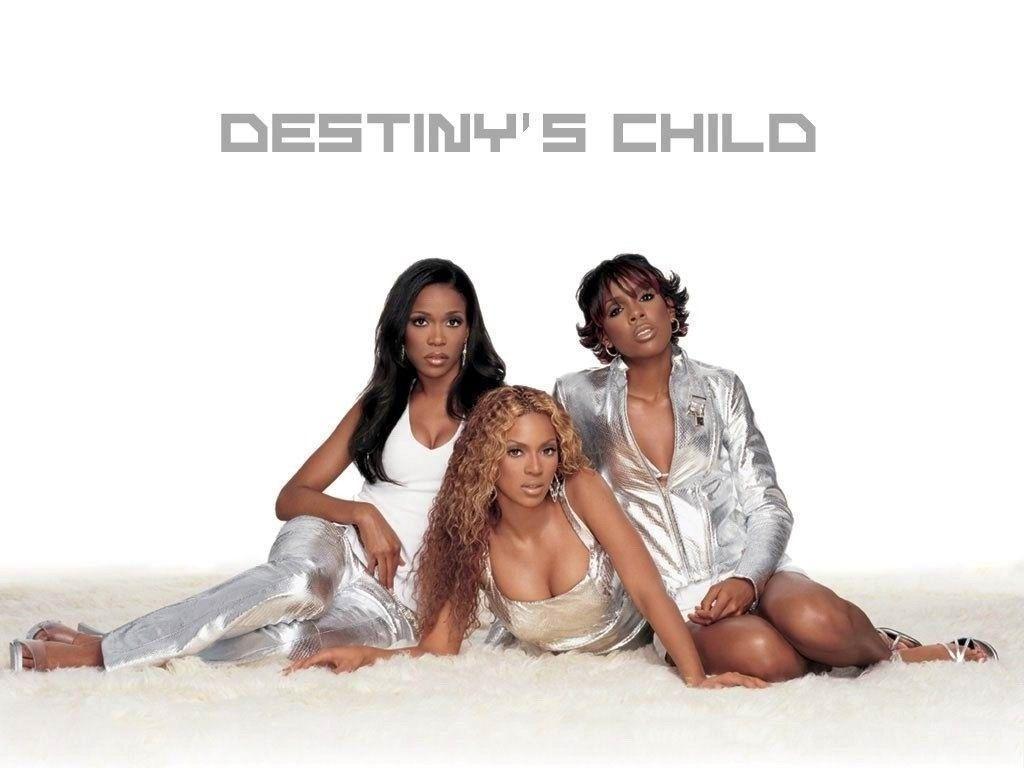
Survivor – The Consolidation
By 2001, the futurism that had shaped late-1990s visuals had largely disappeared. The millennium had arrived, removing the need to present every synthetic texture or technological surface as a prediction of what was coming next. Yet popular visuals had not returned to ordinary life. They became increasingly virtual, expensive and detached from recognisable environments. Britney Spears performed on Mars in “Oops!… I Did It Again,” while Destiny’s Child entered a digitally constructed training facility for “Independent Women Part I.” These videos did not imagine coherent future societies. They placed performers inside artificial worlds that existed principally to demonstrate scale, control and commercial investment.
This transition coincided with another transformation in American entertainment. “Survivor” and “Big Brother” arrived on American television in 2000, establishing competition, surveillance and elimination as major sources of mainstream entertainment. The programmes placed individuals inside controlled environments, imposed rules they did not create, and removed them one by one. The institution remained stable while the contestants were required to demonstrate their adaptability. Scholars would later describe reality television as one of the cultural spaces through which neoliberal ideas of competition, self-management and individual responsibility became ordinary entertainment.
The American title “Survivor” intensified this logic. The format had originated in Sweden as Expedition Robinson, a name evoking castaways, adventure and a shared ordeal. The American adaptation replaced the expedition with the person who remains. A survivor is not merely a winner. The word implies that others have disappeared and that the alternative to continued presence is death. In the programme, this death is symbolic, expressed through elimination and removal from the screen, but the structure remains existential. To stay is to survive. To leave is to cease existing within the world the programme controls.
Destiny’s Child enter this environment after experiencing their own sequence of highly publicised eliminations. LaTavia Roberson and LeToya Luckett had contested Mathew Knowles’s management and were replaced by Michelle Williams and Farrah Franklin. Franklin then left the group several months later. The brand continued through every alteration, transforming what might have produced an institutional break into a rapid succession of personnel changes. When commentators compared the group to the new reality programme, Beyoncé converted the comparison into the title track and organising concept of their third album.
“Survivor” is therefore not simply an album about perseverance. It emerges at the moment when American culture is learning to treat survival as a complete political horizon. The institution does not have to protect, negotiate with or transform itself for the people inside it. The individual must prove capable of adapting to whatever conditions the institution creates.
This represents a sinister development from “The Writing’s on the Wall”. That album had given young women the authority to identify unfair terms within their relationships. They could measure what men contributed, establish boundaries and withdraw from arrangements that exploited their money, attention or emotional labour. LaTavia and LeToya attempted to apply a comparable standard to their professional lives. They questioned management and sought different representation. Yet capitalism does not guarantee that establishing standards will produce negotiation. When the organisation controls the name, contracts and access to the audience, disagreement can make the worker replaceable.
The lesson is no longer simply that a woman should refuse unacceptable conditions. It is that she may only retain her place within a commercial institution while remaining compatible with its authority.
The final trio did not necessarily understand their continuation as proof of moral superiority. They were extremely young women attempting to defend a career in which instability had become public entertainment. Yet the outcome was moralised around them. Beyoncé, Kelly and Michelle remained visible, while the former members disappeared from the group’s commercial present. Continued visibility appeared to confirm adaptability, while removal risked being interpreted as a failure to withstand the demands of the organisation.
This is the neoliberal conception of fitness that entertainment increasingly distributed during the period. The fittest person is not necessarily the most talented, ethical or physically powerful. She is the person capable of absorbing decisions she did not make, managing herself through insecurity, continuing to produce after humiliation and treating the absence of protection as an opportunity to demonstrate character. The system does not promise to protect the fittest. It defines fitness as the ability to survive without protection.
The album responds to this pressure through consolidation. Destiny’s Child are no longer positioning themselves inside the record industry. They are defending the legitimacy of the formation that remains. The title track does not reopen the conflict or examine the distribution of power within the group. It converts continuation into its own answer. They are still present, still successful and still capable of producing. The machinery has not stopped, and its ability to continue becomes part of the argument.
Sonically, “Survivor” reflects this need for stability. It does not possess the conceptual unity of “The Writing’s on the Wall”, whose younger producers, fragmented rhythms and conversational writing had reorganised the group around the language of Black adolescence. Its range is broader and more conventional, moving between contemporary R&B, funk, pop, gospel and balladry. Numerous producers contribute to the album, while Beyoncé’s writing and production credits become significantly more prominent. Contemporary reviewers immediately recognised that creative control was concentrating around her.
This diversity serves a commercial purpose. Destiny’s Child must retain the young R&B audience that had made the previous album successful, protect their crossover into mainstream pop and prove that the new trio can develop into an enduring vocal act. The album does not need to establish a new musical language. It needs to demonstrate that the group can occupy several existing ones without losing its identity.
The increased role of balladry is central to this expansion. “Emotion,” “Brown Eyes” and “Dangerously in Love” position the trio within a lineage of controlled pop and R&B vocal performance. “Emotion,” a reworking of the song written by the Bee Gees and previously recorded by Samantha Sang, connects Destiny’s Child to an older pop tradition. “Dangerously in Love” becomes even more consequential because Beyoncé later records it again for her solo debut, turning a group album track into a bridge between collective and individual authorship.
At the same time, the rhythmic disjunction that would become increasingly associated with Beyoncé begins appearing more clearly. Her writing often resists smooth melodic progression, favouring abrupt accents, unexpected structures and vocal lines that move around the beat.
The most important sonic change, however, is the redistribution of lead vocals. For the first time, the album consistently establishes three distinct vocal subjects. Kelly opens “Bootylicious,” giving one of Destiny’s Child’s defining singles its first attitude and melodic identity before Beyoncé takes two later verses. Michelle’s gospel-trained tone also becomes immediately recognisable, while her presence is no longer confined to proving that another member occupies the harmony. The group’s sound becomes genuinely dependent upon the contrast between all three women.
This redistribution does not produce equality. Beyoncé remains the principal writer, producer, lead vocalist and public centre. Yet Kelly and Michelle are allowed to become identifiable rather than interchangeable. Their increased vocal presence responds directly to the instability of the previous year. After repeated replacements have suggested that membership itself is temporary, the album must establish that the new trio consists of three particular women whose voices cannot be substituted without changing the group.
Vocal subjectivity becomes plural while creative authority becomes more concentrated.
This tension extends into the lyrics. Although “Survivor” is remembered primarily through its most combative singles, the album as a whole is warmer and more positive than its reputation suggests. It contains romance, vulnerability, faith, humour and bodily confidence alongside retaliation. Its dominant position is not aggression but defence. The trio repeatedly assert that they remain economically capable, emotionally intact, morally grounded and professionally united because all four qualities have been publicly questioned.
This defensiveness is distinctly young-adult. The women do not yet speak with the calm security of people whose authority has become unquestionable. They announce their strength because strength remains something they are required to prove. Their affirmations contain the anxiety of performers who understand that commercial acceptance can be withdrawn, relationships can collapse and membership in the institution can end without warning.
“Independent Women Part I” establishes the album’s work ethic before its central conflict is addressed. Originally recorded for “Charlie’s Angels”, the song presents economic autonomy through ownership and consumption. The woman pays for her house, car, jewellery, clothes and leisure, converting financial independence into evidence that her choices belong to her. The single subsequently became one of the group’s largest commercial successes and was incorporated into “Survivor” as the opening statement of its worldview.
It would be reductive to dismiss this message as neoliberal consumerism. At the beginning of the 2000s, the insistence that a woman should control her own income retained a concrete emancipatory force. Financial autonomy could provide the practical means to reject exploitative relationships, particularly for Black women whose labour had historically been expected without guaranteeing them authority or protection. The song extends the family work ethic that had sustained Destiny’s Child from the beginning: discipline produces control over one’s circumstances.
The neoliberal tension appears when self-sufficiency stops being a possibility and becomes an obligation. The statement that a woman can provide for herself can easily become the demand that she should never require support from anyone else. “Independent Women” largely inhabits the first meaning, but the culture surrounding it is moving toward the second. Freedom is increasingly described as the ability to require nothing from institutions, partners or communities.
“Survivor” applies that ethic to the group’s public controversy. Its repeated declarations of improvement transform injury into productivity. The trio will become stronger, richer, wiser and more successful because of what has happened to them. Pain acquires value by producing a more efficient self. The song does not ask why young women should have to endure such instability. It insists that they will convert instability into evidence of fitness.
The lyric is sincere. Beyoncé described writing it from frustration after the group’s personnel changes and public criticism, while Michelle later recalled the emotional intensity of its recording. The song offered the trio a way to recover control over a narrative being produced around them.
Yet its political horizon remains limited. Survival does not mean freedom, fairness or protection. It means that the organisation has not eliminated you. The alternative is not reform or collective negotiation, but symbolic death: removal from the group, loss of access to its audience and disappearance from the future attached to its name.
This is why the repeated use of the singular identity, “I’m a survivor,” matters. “We survived” would describe an event experienced by a collective. It could invite questions about what happened, what produced the danger and who was lost. “I’m a survivor” transforms endurance into personality. The conditions recede, while the individual becomes permanently defined by her capacity to withstand them.
“Bootylicious” offers a more playful form of affirmation. The song places a body associated with Black femininity at the centre of mainstream pop pleasure, without apologising for its size or desirability. Its humour prevents bodily confidence from becoming a solemn declaration, while its sample of Stevie Nicks’s “Edge of Seventeen” allows Destiny’s Child to move across Black R&B and established pop history within the same recording.
Kelly’s opening is particularly important. The song may remain structurally centred on Beyoncé, but its first voice belongs to another member. Kelly introduces the flirtation, confidence and lightness through which the record is understood. The moment demonstrates that the trio’s consolidation does not depend solely on suppressing internal difference. It also depends on giving that difference a recognisable musical function.
“Nasty Girl,” however, reveals the political limit of the group’s defensive strategy. The song directs its contempt toward other women, particularly Black women whose clothing, sexuality and public conduct are judged excessive. Destiny’s Child attempt to distinguish their controlled sensuality from a femininity marked as vulgar, undisciplined and unworthy of respect. The accompanying video intensifies the argument by subjecting the women identified as “nasty” to physical transformations.
This is not an incidental contradiction that can be removed from the group’s history. It is slut shaming, and it reveals how easily self-protection can become downward aggression. Rather than challenging the hierarchy through which Black women are divided into respectable and disreputable categories, the song attempts to secure Destiny’s Child’s position on its preferred side.
The strategy ultimately fails because the same culture continues to describe Beyoncé through the language from which the group attempts to distance itself. The accusation that she is “spoiled” presents her access as the product of paternal favour rather than labour. The simultaneous description of her as “ghetto” suggests that money and opportunity have failed to produce legitimate refinement. Together, the labels construct her as undeserving new money, privileged without possessing the cultural right to authority.
This sorting becomes one of the central conditions of the era. Black women are encouraged to distinguish themselves from the stereotype, but they do not control where its boundaries are drawn. Beyoncé can embody family investment, Christian respectability, relentless work and commercial achievement, yet remain vulnerable to the same racialised classification deployed against women whom “Nasty Girl” rejects.
The publicity surrounding the lineup changes intensifies this treatment. “Saturday Night Live” built its recurring Gemini’s Twin sketches around the idea that members of a girl group could be continually replaced.
The joke treated the instability as a personality problem rather than a dispute involving management, contracts and workplace power. Beyoncé’s visibility made her the easiest figure to blame. Although she was still only a young woman operating inside a structure controlled by parents, executives and lawyers, she became the presumed architect of every exclusion. The projection of maturity onto Black girls made it possible to erase her own youth while holding her individually responsible for an organisation she influenced but did not fully control.
Religion offers another form of defence. Christianity, previously embedded in the group’s vocal tradition and moral language, becomes explicit on “Survivor”. Kelly refuses to compromise her faith, and the album closes with a Gospel Medley. This ending does more than reassure parents. It places independence, sensuality, romantic vulnerability and professional ambition beneath a moral framework that certifies the trio’s continued respectability.
Faith allows them to assert autonomy without presenting themselves as hostile to authority itself. They may reject individual men, public rumours and commercial doubt, but their independence remains accountable to a higher order. Christianity provides continuity at a moment when nearly every other element of the group has been publicly destabilised.
The visual campaign develops the same movement from artificial control to physical ordeal. “Independent Women Part I” places the trio inside a high-budget virtual training environment derived from “Charlie’s Angels”. They complete exercises in agility, combat, altitude and speed, presenting independence as discipline performed within a world of technological abundance. The setting is not futuristic in the earlier sense. It does not predict what society will become. It removes the group from ordinary reality and transforms self-sufficiency into spectacle.
The “Survivor” video abandons the virtual facility for an island, but it remains equally detached from lived social experience. Nature becomes an allegorical test. The trio wash ashore, adapt to the environment and emerge together, while the institutional conditions behind the song disappear. The conflict has been translated into weather, water and physical endurance. A managerial dispute becomes an elemental ordeal.
The visual logic resembles the reality programme that inspired the title. The environment is accepted as a fact. The people inside it must demonstrate fitness. Those who are no longer present remain outside the frame.
“Bootylicious” moves from ordeal into choreographed pleasure, drawing heavily from Michael Jackson’s performance vocabulary and placing the trio at the centre of a large visual production. Stevie Nicks appears with them, reinforcing the song’s movement across musical traditions. “Emotion,” meanwhile, divides the screen into three simultaneous narratives, making the individuality of Beyoncé, Kelly and Michelle the formal principle of the video itself.
The campaign therefore consolidates the trio through differentiation. Beyoncé embodies command, creative authority and visible ambition. Kelly represents warmth, sensual ease and a more approachable vulnerability. Michelle carries faith, emotional seriousness and the perspective of someone newly entering an already established institution. These roles can be restrictive, but they resolve an urgent commercial problem. The group no longer asks audiences to perceive every member as equal. It demonstrates that each is necessary for a different reason.
The commercial success of the era confirmed that the final trio could sustain Destiny’s Child internationally. “Independent Women Part I” and “Bootylicious” reached number one in the United States, while “Survivor” and “Emotion” extended the campaign. The album itself reached the top of the American chart, even as contemporary reviews criticised its self-righteousness, uneven balladry and defensive lyrical preoccupations.
Those criticisms identified a genuine feature without always recognising its source. Survivor is defensive because the trio are being asked to transform a workplace crisis into entertainment, inspiration and evidence of personal growth. They cannot simply continue. They must prove that continuation has made them better.
The album ultimately consolidates several developments at once. It establishes Beyoncé as the creative centre, preparing the authorship and production authority that will structure her solo career. It gives Kelly and Michelle enough vocal space to become distinct performers rather than supporting functions. It secures the final trio as the definitive public image of Destiny’s Child. It also embeds the group within a broader culture that interprets adaptation as virtue and continued access as proof of fitness.
There is a genuine achievement inside that consolidation. For the first time, Destiny’s Child sound like three recognisable women. Kelly can open a major single. Michelle can alter the emotional and spiritual colour of a song. Beyoncé’s centrality no longer requires the other voices to disappear. The hierarchy remains, but the collective becomes musically richer because its differences are finally heard.
Yet the workplace beneath the music has become less negotiable. The earlier conflict has demonstrated that the organisation can survive the removal of foundational members without surrendering its name, investments or commercial future. Individual members may become more distinct, but the managerial structure has acquired the ultimate form of authority: the capacity to continue without those who challenge it.
Survivor does not consciously offer a political theory of neoliberalism. It records how completely its language had entered the common sense of young performers and their audiences. Independence meant providing for oneself. Resilience meant returning to work after injury. Fitness meant remaining useful under conditions one did not control. Elimination became entertainment, while survival appeared to be the most meaningful victory available.
The trio’s strength is real, but the culture surrounding it narrows the definition of freedom. “The Writing’s on the Wall” had taught women to establish standards for how they should be treated. “Survivor” reveals that applying those standards to managerial power can threaten one’s continued existence within the institution. The album responds by turning defence into identity, plurality into stability and endurance into mythology.
Destiny’s Child survive, but survival is not liberation. It is the consolidation of life within a system whose terms remain unchanged.


 Elemental Emancipation
Leave a comment