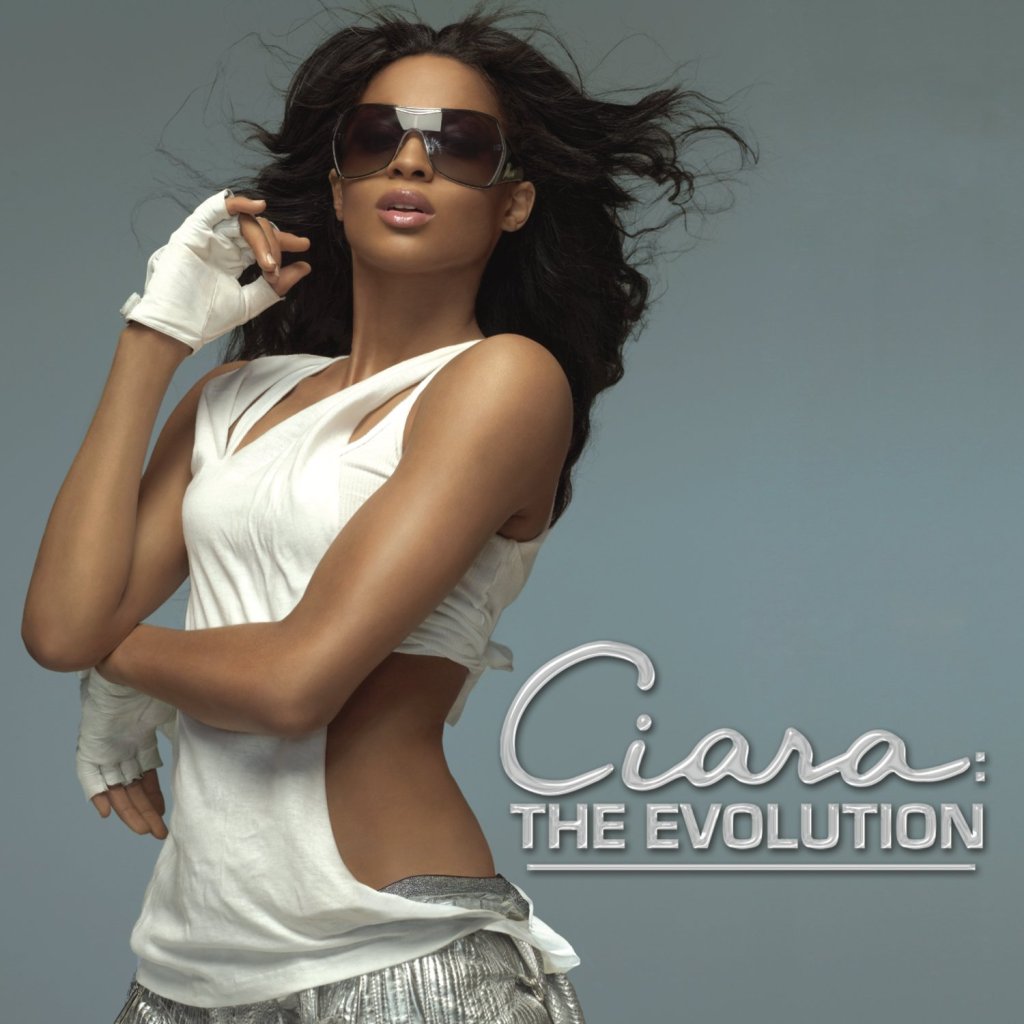
The Evolution – The Consolidation
By 2006, the teenage pop wave that had structured the beginning of the decade had largely disappeared. The acts who emerged at the end of the 1990s were no longer presented as teenagers, and the market had moved away from the bright and highly standardised pop through which they had initially been introduced. However, a younger audience continued to be addressed through R&B. Ciara, Chris Brown, Rihanna, Teairra Mari and, later, Cassie represented a new generation whose youth was articulated through urban music rather than through the earlier teen-pop framework.
The conditions supporting this wave were nevertheless becoming less stable. Artists whose careers extended back to the 1990s continued to occupy significant positions within the market, while adult consumers remained more likely to purchase complete albums in stores. Younger listeners still generated visibility around singles, videos, radio rotation, and digital circulation, but they were participating less consistently in the album economy. The question was no longer simply whether teenage and young-adult audiences could sustain mainstream performers. It was whether their attention could still be converted into album sales at the same scale.
The musical landscape was also changing. The Southern hip-hop movement that had supported the emergence of crunk&B no longer occupied the same position it held around the release of “Goodies”. Atlanta remained influential, but crunk had lost some of its novelty and no longer functioned as the dominant point of expansion within urban music. The sound that had given Ciara immediate differentiation in 2004 could not be expected to organise the rest of her career.
This shift created an urgent problem of positioning.
“Goodies” had introduced Ciara through an unusually precise combination of geography, sound, age, and performance. She was linked to Atlanta, crunk production, choreography, and a form of controlled sexuality. The clarity of the formula allowed her to enter the mainstream without competing directly with singers whose legitimacy depended on vocal power. However, the decline of crunk&B meant that this specificity could quickly become restrictive. The second album therefore needed to establish that the success of “Goodies” was not dependent on one musical movement.
“The Evolution” becomes conceived as an expansion of the lane rather than its abandonment.
The album attempts to reposition Ciara as a broader R&B act while maintaining the elements that had made her identifiable. Urban production and dance remain central, but they no longer operate within a single sonic framework. The project moves through several contemporary R&B registers, including club-oriented tracks, midtempo material, sensual slow songs, and records shaped by hip-hop. The traditional vocal ballad remains largely absent. Ciara expands into different forms of R&B without placing herself in the area where technical vocal demonstration would become the principal criterion of evaluation.
This distinction matters. The objective is not to transform Ciara into another type of singer. It is to demonstrate that the characteristics established on “Goodies” can function beyond crunk&B.
The title announces this ambition directly. “The Evolution” presents the album as a developmental stage, suggesting that the persona introduced two years earlier has reached a point of greater control and versatility. The use of continuous interludes reinforces this intention. Their presence recalls the structure of several Janet Jackson projects, where transitions contribute to the sense that the album belongs to a complete era rather than functioning as a collection of independent tracks. The reference is not limited to sound. It places Ciara within the lineage of the performer whose movement, imagery, and musical identity are intended to operate as one system.
The rollout reveals the strategy more clearly.
“Get Up,” released in connection with the motion picture “Step Up”, operates as a transition between the two albums. It returns to the aspects of Ciara’s identity that had already been validated: urban production, rhythmic intensity, and choreography. The record does not attempt to alter the public understanding of her. It confirms that the energetic performer introduced through “Goodies” and “1, 2 Step” remains present.
This continuity is commercially useful. Before expanding the formula, the campaign re-establishes it.
The more significant development arrives with “Promise.” Rather than introducing “The Evolution” through another fast, crunk-derived single, Ciara moves into midtempo R&B. The decision broadens her positioning without removing dance from the proposition. She does not stop moving in order to become more mature. Movement itself is slowed down.
This is where “Promise” becomes one of the most important records of her career.
The song demonstrates that choreography does not require speed or percussive aggression to remain central. Ciara’s sensuality is constructed through restraint. Her gestures are elongated and controlled, allowing the body to communicate what vocal excess would ordinarily be expected to provide. The performance is organised through the chair, the frame, the silhouette, the movement of her hair, the angle of the body, and the pauses between gestures. Desire is not produced through overt exposure. It emerges through precision.
In this sense, “Promise” presents the adult development of the debut’s central proposition. On “Goodies”, control was articulated through refusal. Ciara could flirt and participate in hip-hop spaces without granting men access to her body. On “Promise,” the emphasis moves from refusal to self-directed sensuality. She no longer defines agency mainly through what is withheld from men. She defines it through the organisation of desire on her own terms.
The evolution is therefore not vocal. Ciara does not attempt to become a belter or to compete with the dominant vocalists of contemporary R&B. Instead, she expands the expressive role of movement. The body that had previously translated crunk into a feminine physical language is now used to translate intimacy.
“Like a Boy” develops another aspect of this expansion. The production moves away from the immediate sonic language of the debut, using an unusual rhythmic structure and string elements to create tension. The song also gives Ciara a clearer concept through which to organise gender performance. Rather than simply criticising the behaviour of an individual man, she temporarily inhabits the codes associated with masculinity.
The visual treatment reinforces this reversal. Clothing, posture, choreography, and duplication allow Ciara to alternate between feminine and masculine positions. The song asks whether behaviour considered acceptable from men would remain acceptable if performed by women. This question is familiar within R&B writing, but the video allows Ciara to embody the argument physically. Gender is not only discussed. It is staged as movement, styling, and attitude.
“Like a Boy” confirms that choreography can serve a function beyond spectacle. It can organise a social concept.
Across these singles, the expansion is visible. “Get Up” maintains energetic continuity. “Promise” relocates sensuality into the midtempo form. “Like a Boy” connects physical performance to a gendered argument. Each record develops a different dimension of the same performer.
The album’s strength lies in this consolidation. It proves that Ciara’s initial success was not simply the result of crunk&B reaching its commercial peak. She remains legible after the sound begins to recede because the deeper basis of her appeal was not crunk alone. It was her ability to make contemporary R&B physical.
This also defines the album’s limit.
Although the project is called “The Evolution”, each of its most successful developments continues to depend on the same central asset. Ciara expands into different sounds, tempos, and concepts, but choreography remains the mechanism through which those forms become convincing. She can move from club music to sensual R&B or from flirtation to gender commentary, yet the body continues to carry much of the expressive work.
This is not a failure of evolution. It reveals the specific form that her evolution takes.
However, the project does not yet determine the larger structure within which this language will develop. Several possible positions remain open. Ciara could be consolidated as an heir to Janet Jackson’s performer-first model. She could remain anchored within Atlanta and expand as an urban R&B act. She could move toward global dance-pop as electronic music became increasingly central. She could also develop into a Black pop performer with greater control over visual authorship and conceptual presentation.
“The Evolution” gestures toward each of these possibilities without selecting one.
The album therefore comes close to functioning as a complete conceptual era, but the concept remains more announced than fully organised. The title, interludes, singles, and choreography all point toward development.
The commercial reception reflects a related tension. The album sells considerably fewer copies than “Goodies”, even though its singles continue to attract substantial attention. This does not necessarily indicate that half of Ciara’s audience had disappeared. It reflects a growing separation between interest in individual songs and the purchase of full albums.
This separation was particularly important for artists addressing teenage and young-adult listeners. Digital sharing and downloading had become increasingly embedded within everyday music consumption. Younger audiences could participate intensely in an album era through videos, radio, online circulation, and individual tracks without purchasing the complete project. Meanwhile, older audiences continued to sustain artists with longer careers through physical album purchases.
Ciara retained listeners, but the economic behaviour of those listeners was changing.
The result complicates how the album’s performance should be interpreted. “The Evolution” successfully demonstrates that Ciara can survive the retreat of crunk&B and produce relevant records in several areas of contemporary R&B. It confirms that “Goodies” was not an isolated commercial occurrence. Yet it does so at the moment when success among younger listeners becomes less visible through album sales.
The project consolidates her place without completely securing its future structure.
“The Evolution” therefore proves continuity more than transformation. It establishes that Ciara can move beyond crunk&B while remaining dependent on the physical language that first made her distinct. The album expands the lane sufficiently to preserve her position. It does not yet decide where that lane is supposed to lead.

 Elemental Emancipation
Leave a comment