
Goodies – The Lane
By 2003, the urban music landscape is organised around two increasingly distinct figures. Hip-hop acts embody rhythm, attitude, and cultural authority. Contemporary R&B singers provide emotional legibility, vocal excellence, and polished musicianship. Collaboration allows the two genres to circulate together, but their respective functions remain relatively stable. Rappers carry movement and edge. Singers carry melody and feeling.
The period’s most successful records frequently rely on this division of labour. Nelly and Kelly Rowland’s “Dilemma,” or Ja Rule’s collaborations with Ashanti, place the assertiveness of the male hip-hop act alongside the softness of a radio-friendly R&B voice. The singer does not displace the rapper, and the rapper does not become too melodic. Each supplies what the other is presumed to lack. Hip-hop provides attitude; R&B makes that attitude emotionally accessible and commercially smoother.
Within female R&B, the voice remains the principal source of legitimacy. Technical ability signals seriousness. Even when image, choreography, and sexuality contribute to an artist’s visibility, they are generally expected to support vocal performance. The dominant women of the period are presented as singers first. The other ones have to prove a form of lyricism like Ashanti.
One particular model has therefore become increasingly scarce: the Black female performer positioned between R&B and pop, whose authority rests as much on dancing as on vocal demonstration.
For nearly two decades, Janet Jackson had occupied this position. Janet was not simply an R&B singer who danced. Choreography structured her artistic identity. The body did not illustrate the music after the fact; it organised how the music was understood. Pop accessibility, rhythmic precision, visual storytelling, and controlled vocal presence operated together. Janet demonstrated that a Black woman could command mainstream pop without conforming either to the vocal hierarchy of traditional R&B or to the whiteness around which much of dance-pop remained organised.
This position was unusually difficult to reproduce because Janet had made it appear singular. Her influence was extensive, but her precise place in the market remained largely hers.
The controversy surrounding the 2004 Super Bowl halftime show destabilised that position. It accelerated Janet’s removal from mainstream circulation at the moment when a younger generation of artists was beginning to enter the industry. The performer-first space she had occupied remained culturally legible, but its central figure was no longer granted the same institutional protection.
A vacancy appeared.
Goodies arrives within that opening, but it does not attempt to reproduce Janet’s sound or maturity. Ciara translates the performer-first model into a younger, more regional, and more explicitly hip-hop-adjacent language. Her point of entry is not established pop. It is Atlanta.
By 2004, Southern hip-hop is no longer an emerging regional alternative. Its rhythms, producers, vocal patterns, and social codes are moving toward the centre of American popular music. Lil Jon’s rise has been developing for several years, turning crunk from a local and club-oriented form into a recognisable mainstream production language. The sound is loud, looped, and built to circulate in clubs. It privileges energy over introspection and bodily reaction over melodic complexity.
Ciara is the figure of this movement through a feminine lens.
The term “crunk&B” articulates the strategy clearly. It does not describe a complete genre so much as a point of market differentiation. Ciara is placed between R&B melody and hip-hop rhythm, but she does not fully belong to either established category. She sings, yet vocal virtuosity is not the central proposition. She moves within hip-hop, yet she is not a rapper. Her legitimacy comes from occupying the distance between the two.
That position allows her to solve several industrial problems at once. She gives Atlanta’s expanding sound a young female figure. She reintroduces choreography as a central component of Black female mainstream performance. She also participates in the return of the teenager as a commercially important urban artist.
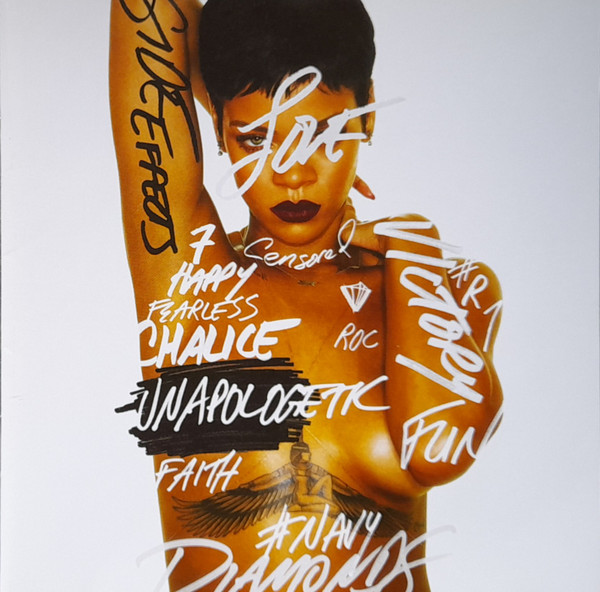
This timing matters. Goodies precedes the debuts of Teairra Mari and Rihanna by almost a year and Cassie’s by nearly two. These artists would later appear to belong to the same broad mid-2000s generation, but Ciara enters before the wave has consolidated. Her debut helps establish the terms through which young Black women will be introduced during the period: not as incomplete versions of established adult singers, but through a sharply identifiable cultural signifier.
For Ciara, that signifier is crunk&B.
The precision of the positioning distinguishes her immediately. Many young artists enter the market through general potential. Their first albums test several identities, allowing audience response to determine which one will be retained. Ciara arrives with the opposite strategy. The sound, geography, movement, and persona are legible from the first single. She does not need to discover a lane because the lane precedes her full introduction.
Jazze Pha is central to this construction. Through Sho’nuff, Ciara is not merely attached to a record company. She is embedded within a production ecosystem. The label gives her a specific cultural origin and helps frame her as the feminine sound of Atlanta. This is more significant than regional branding. In an industry where authenticity was starting to be rewarded, Sho’nuff provides coherence.
Ciara becomes its most prominent artist and the figure through whom the label’s ambitions acquire mainstream scale. The endeavour is therefore reciprocal. Sho’nuff gives Ciara a sound and an identity. Ciara gives Sho’nuff a national face.
Musically, Goodies remains firmly urban. The crunk production is cleaned and contained without being stripped of its urban roots. Bass, repetition, sparse melodic structures, and percussive insistence dominate. The sound retains enough aggression to remain connected to hip-hop, but it is polished for teenage and young-adult audiences.
Ciara’s voice fits within this architecture precisely because it is not overwhelming. Her vocals are thin but confident, operating inside the production rather than attempting to rise above it. She does not compete with the beat for authority. The voice functions rhythmically, allowing phrasing, attitude, and repetition to carry as much weight as range.
The vocals present a different distribution of emphasis. Like Janet before her, Ciara’s full performance cannot be located in the recording alone. Movement completes the proposition. Her body provides the precision, strength, and dynamism that contemporary R&B usually asks the voice to communicate.
The choreography therefore functions as musical information. It explains how the beat should be inhabited. Ciara does not simply dance to crunk&B; she gives the form a controlled physical vocabulary. Where crunk can appear explosive and collective, her movement is fluid, athletic, and exact. Aggression becomes discipline through her work.
This balance shapes her persona. Ciara is feminine without being too delicate, seductive without presenting herself as sexually available, and embedded within hip-hop without surrendering control to its masculine gaze.
“Goodies” establishes these terms immediately. The song is not merely an introduction to her sound. It is an introduction to the rules governing access to her image. Ciara can participate in flirtation, nightlife, and hip-hop spectacle, but participation does not grant men authority over her body. Attraction is acknowledged. Access is refused.
The distinction is crucial.
Ciara does not reject sexuality or present innocence as moral superiority. She remains aware of being desired and uses that awareness confidently. What she refuses is the assumption that visibility produces availability. She can dance, flirt, and inhabit the same spaces as men while retaining the right to determine where interaction ends.
Her debut persona is therefore constructed around controlled sexuality. The message is not abstinence. It is agency.
This positioning is particularly effective within the gender structure of early-2000s hip-hop. Women, as vixens, frequently appear as visual confirmation of masculine success, their bodies incorporated into a broader language of access and possession. Ciara enters that environment without rejecting its music or withdrawing from its spaces. Instead, she alters the terms of participation from within them.
She adopts the sound while refusing one of its recurrent gender assumptions.
The album’s lyrics more broadly remain centred on love, attraction, disappointment, and the instability of relationships. In this respect, Goodies does not pursue conceptual ambition. Its subject matter is familiar and accessible. What distinguishes the project is not what Ciara sings about, but the posture from which she sings. Emotional experience rarely dissolves her self-possession. Even vulnerability remains contained within a persona organised around control.
The rollout reinforces this identity. “Goodies” introduces the boundaries. “1, 2 Step” shifts the emphasis toward movement and confirms choreography as the central language of the project. Together, the singles establish Ciara as neither a conventional vocalist nor a direct female extension of crunk. She is a performer whose singing, dancing, and production environment are inseparable.
The success of both records confirms that this hybrid position is the album’s commercial centre.
“And I” attempts a different reading. By presenting Ciara through a more conventional R&B ballad, the single asks audiences to receive her primarily as a singer. The response is noticeably weaker. The issue is not simply musical quality. The song removes the clearest elements of differentiation. Without the crunk production and choreography, Ciara moves closer to a field already populated by stronger and more established vocalists.
The rollout consequently returns to “Oh.” The track restores hip-hop adjacency, regional identity, physicality, and controlled seduction. It does not expand the proposition. It reactivates it.
This sequence reveals both the strength and the limitation of the debut. Ciara’s lane is sufficiently clear that departures from it immediately reduce her legibility. Audiences understand what she represents, but that understanding begins to function as expectation. The identity that allows her to enter the mainstream also defines the boundaries within which she can remain recognisable.
Goodies is therefore not simply a successful debut or the album that popularises crunk&B. It is a study in the power of precise positioning. Ciara arrives before many of the young women later associated with her generation, yet she appears more completely formed than most of them. Geography, production, choreography, age, and gender politics converge around a single proposition.
She does not enter the industry as possibility. She enters as definition.
That definition gives her immediate authority. It also creates the central difficulty of her subsequent career. Acts who begin without a fixed identity can treat reinvention as discovery. Ciara begins with a lane so coherent that evolution risks being interpreted as departure. As Atlanta’s crunk moment recedes, the question is not simply be whether she can adapt. It is whether the marketplace is willing to recognise her outside the structure that first made her visible.
The achievement of Goodies is clarity.
Its consequence is that clarity becomes a constraint.


 Elemental Emancipation
Leave a comment