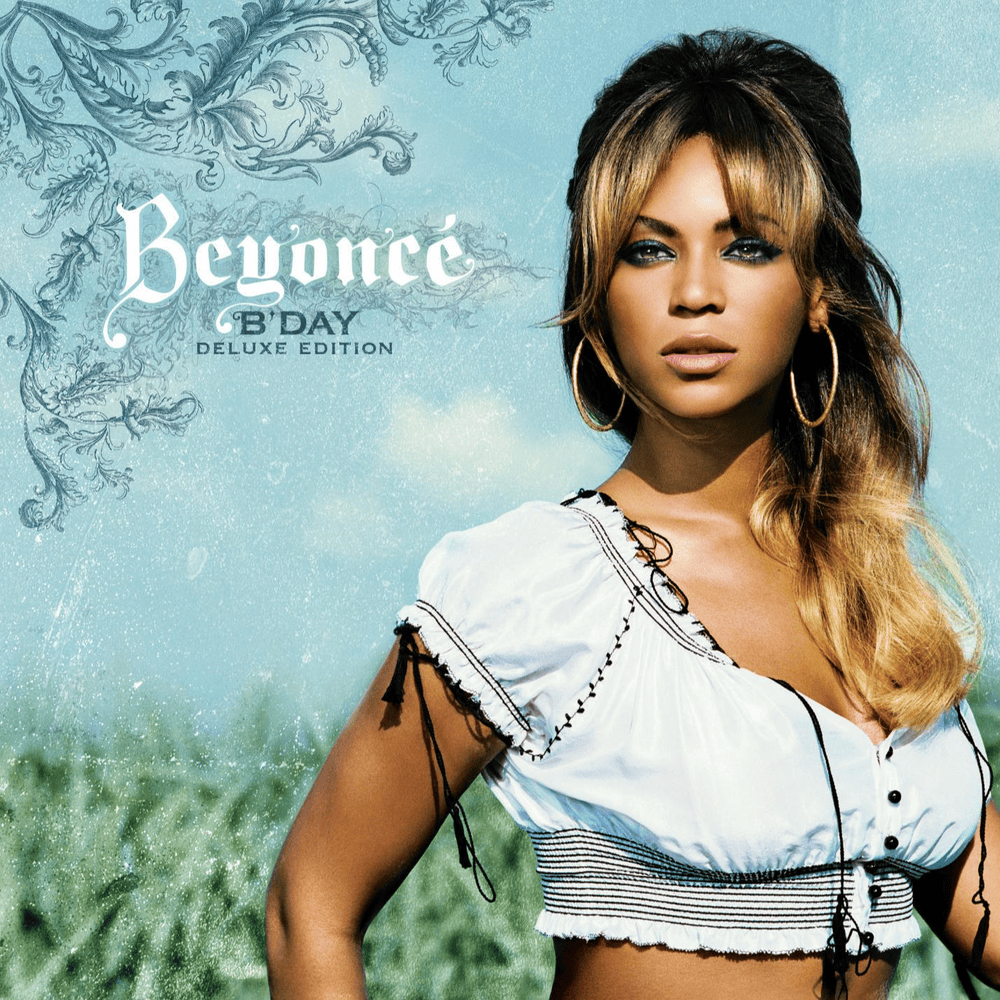
B’Day – The Line
By 2006, the musical landscape Beyoncé had entered three years earlier had already shifted. The dominance of R&B in the early 2000s was fading, not abruptly, but through a steady reorientation of what the mainstream considered viable. A hybridised “urban pop” began to emerge, often led by white artists whose work borrowed heavily from R&B and hip-hop aesthetics while distancing themselves from the traditions that had shaped them. Nelly Furtado’s Loose and Justin Timberlake’s FutureSex/LoveSounds defined this new centre. At the same time, dancehall and Latin pop surged into the mainstream through figures such as Sean Paul and Shakira, reshaping the rhythmic vocabulary of popular music. In this evolving environment, the space available for Black R&B artists narrowed considerably.
B’Day enters this landscape without adjusting itself to these changes. Instead of following the electronic elements beginning to dominate the charts, Beyoncé remains close to the vocabulary she had established with “Crazy in Love”: percussive, rhythmic, driven by funk and an almost physical sense of propulsion. “Déjà Vu” carries that energy unmistakably, with an urgency rooted in live instrumentation and vocal dynamism. The album as a whole maintains this direction, committed to a sound that is both contemporary and tied to a lineage of Black performance that predates the mid-2000s shift toward digital production. Beyoncé presents herself as an R&B artist whose work absorbs funk, soul, and hip-hop influences without dissolving into the hybridised pop structures that were becoming the industry norm.
The vocal delivery on B’Day reinforces this position. Beyoncé sings loudly, forcefully, with a clarity tied to R&B’s tradition of frontal expression. Even when the arrangements flirt with other genres, the voice remains anchored in a history that values precision and presence. The loudness is not simply volume; it is a stylistic insistence. It marks her refusal to quieten herself in a moment when R&B voices were increasingly expected to soften or adapt to pop trends. The choice gives the album its cohesion, even as its sonic palette moves across tempo and texture. Beyoncé sounds grown, assured, and uninterested in whether the landscape has space for the kind of work she is producing.
Commercially, B’Day occupies an unusual position. Its first singles (“Déjà Vu” and “Ring the Alarm”) perform respectably but not overwhelmingly. They receive coverage, radio rotation, and performance slots, yet they do not shape the year’s musical narrative in the way a lead single once did for an established artist. The project corrects its course with “Irreplaceable,” a mid-tempo track that stands apart from the album’s overall sonic identity. The song’s structure carries an undercurrent of country: a rhythmic looseness and melodic simplicity that aligns with American musical traditions often associated with whiteness. “Irreplaceable” becomes the defining hit of the album, marking the moment Beyoncé fully enters the American mainstream across all demographics. Its success reflects not only its accessibility but also the racialised boundaries of musical acceptance: R&B with country inflections travels further than R&B without them. It also signals who is permitted to sing which sounds. Beyoncé becomes, through one song, a figure capable of carrying genres the nation considers foundational to itself.
Internationally, the second major hit comes from “Beautiful Liar,” the collaboration with Shakira. This pairing reflects the 2006 moment clearly: Latin and cross-cultural collaborations were ascendant globally, and Beyoncé’s alignment with Shakira positions her within a transnational pop framework that stretched beyond American R&B’s shrinking space. The song’s success also reflects Beyoncé’s adaptability to global markets, even as she remains stylistically rooted in her own traditions.
Another element emerges within the album that marks a shift in Beyoncé’s public identity: her early engagement with the language of wealth and luxury. On “Upgrade U,” she lists markers of affluence (watches, briefcases, accessories) not symbolically, but with a fluency that positions Black access to capital as an ordinary part of adulthood. This moment predates the more explicit critiques of Black capitalism that would later surface in conversations about her and Jay-Z. Here, wealth enters the frame as a natural extension of the work-centric worldview she embodies: success validated through tangible signs. For Beyoncé’s elite Gen-X upbringing, shaped by the belief that labour could mitigate structural limitation, wealth was not merely aspiration; it was security and proof that work had produced stability. The line between protection and consumption becomes porous.
Another shift occurs in the public life of the couple. Jay-Z appears on several tracks, and his own transformation during this period matters. He has moved from being a successful rapper to an executive, a figure associated with maturation, responsibility, and upward mobility. The socio-cultural reading of him changes accordingly. Within B’Day, the couple’s image solidifies into a Black power partnership that departs from the archetypes previously available. Beyoncé’s image does not adapt to Jay-Z’s; his adapts to hers. Together, they embody a form of aspiration for the Black elite and a model of exemplarity for the Black middle class: a power couple whose trajectory seems reachable through discipline, stability, and work. The idea resembles the aspirational logic of 1990s Black sitcoms, where representation offered a blueprint for upward mobility and collective possibility.
The creation of B’Day itself reflects the generational logic that structured Beyoncé’s upbringing. She completed the standard version of the album in a matter of weeks, which is possible only for someone trained to work quickly, intensely, and without visible disruption. The speed reflects not only her discipline but also the industry expectation for frequent output. At the time, major artists were expected to release albums every two years; Beyoncé had taken three. The pressure to deliver a project that could stabilise her place in an evolving market was real. Her ability to produce at this pace becomes part of the album’s narrative: labour as identity, labour as reassurance, labour as the infrastructure of excellence.
The Beyoncé Experience tour develops another dimension of her politics. She surrounds herself with an all-women band, a decision that carries weight in an industry where musicians, especially those in supporting roles, are overwhelmingly men. Beyoncé practices gender politics structurally, not rhetorically. The choice signals that the success generated by Black women’s labour can be redistributed within a network of other women. It is one of the earliest examples of her using her position to reshape the conditions of performance around her, long before she articulated feminist positions explicitly.
Taken together, B’Day reflects a moment in which Beyoncé is navigating a shrinking cultural space while maintaining the lane she carved for herself. She expands her reach through sound, image, productivity, and relational positioning, yet remains tied to the belief that excellence (accelerated, efficient, unmistakable) can secure her place. The album holds the tension between a market moving away from her genre and a generational worldview that treats work as the central tool of survival. If Dangerously in Love was the presentation, B’Day is the acceleration: the moment when readiness becomes activity, and activity becomes the condition for staying visible.
 Elemental Emancipation
Leave a comment