Dangerously In Love – The Proof
By 2003, R&B and hip-hop still dominated Anglo-American popular music. Black music had not yet been pushed into the specialised spaces it would occupy later in the decade. It remained the language through which the mainstream understood rhythm, sensuality, maturity, and modernity. Even white pop artists turned toward R&B when they wanted to escape the associations of adolescence. Britney Spears, like several of her contemporaries, used its production, choreography, and visual codes to create a more adult image. R&B did not sit outside pop. It provided pop with a vocabulary for adulthood.
Yet the landscape was already beginning to fragment as the number of available propositions multiplied. The genre remained ubiquitous, but the mechanisms that had enabled its crossover were gradually separating. Dangerously in Love appeared during this transitional moment, late enough to benefit from the abundance of early-2000s R&B. The project could still move between hip-hop, soul, balladry, dancehall, adult contemporary, and mainstream pop because all of these lanes remained commercially viable. The difficulty was not that Beyoncé lacked a place. It was that several places were available to her, and the public had not yet decided which one it associated with her.
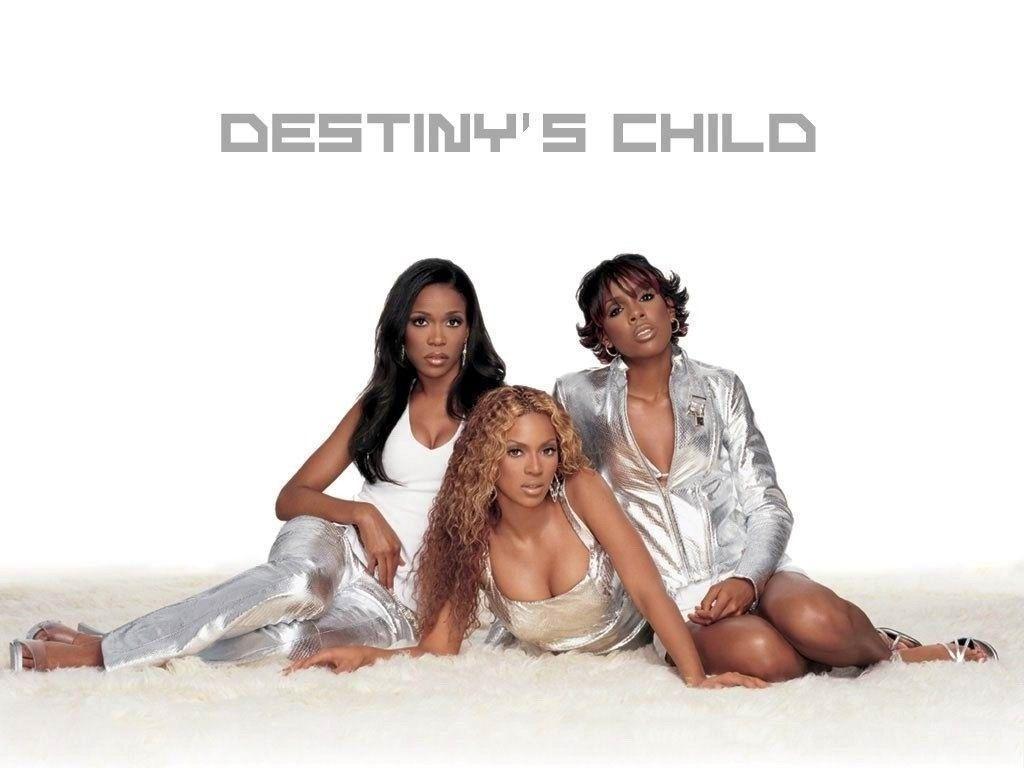
Destiny’s Child had already made Beyoncé famous. It had also given her something less visible but equally decisive: protection. The group had not been assembled abruptly around an executive calculation. It had developed over several years through childhood rehearsals, failed opportunities, lineup changes, regional performances, and the gradual professionalisation of a project managed by her father, Matthew Knowles. In the process, Destiny’s Child became a structure through which Beyoncé could learn the mechanisms of the industry before having to confront them alone.
Matthew Knowles remained her manager, and the album represented the extension of that system into a new phase. The same managerial protection, rehearsal culture, promotional discipline, and attention to positioning that had shaped Destiny’s Child were now applied to Beyoncé as an individual proposition.
This protection was an advantage, but it did not make her solo success inevitable. The fame of a group does not automatically transfer to its individual members. An audience may recognise a singer’s face, voice, and position within a collective without feeling compelled to follow her once the collective disappears. Beyoncé did not have to begin from obscurity, but she still had to begin again. Destiny’s Child had proven that the public wanted Destiny’s Child. It had not yet proven that the public wanted Beyoncé alone.
Her first attempts confirmed the distinction. A collaboration with Amil placed her voice outside the group without transforming her into an individual pop figure. “Work It Out,” released in connection with Austin Powers in Goldmember, presented her as a mature vocalist and performer, but it did not produce the solo breakthrough that her position within Destiny’s Child had made seem inevitable. The song already contained many elements that would later define her, including live instrumentation, horns, physical performance, vocal force, and references to older traditions of Black entertainment. Yet these elements had not been organised into a public narrative strong enough to make Beyoncé appear singular.
The timing became more delicate when Kelly Rowland achieved a major hit with Nelly in 2002. “Dilemma” gave Kelly an immediately recognisable solo identity before Beyoncé had secured her own. This did not reverse the hierarchy within Destiny’s Child, but it demonstrated that the presumed centre of a group would not necessarily be the first member to convince the public independently. Beyoncé’s solo arrival could no longer depend on the assumption that audiences had been waiting for it. It needed to be produced as an event.
At the beginning of the 2000s, the tabloid press remained central to the construction of pop stardom. Music did not circulate separately from celebrity narrative. Relationships, transformations, rivalries, public appearances, and carefully controlled rumours helped organise the way audiences understood an artist. A successful single could introduce a sound, but the press helped introduce a person. Beyoncé’s relationship with Jay-Z provided the narrative her previous solo attempts had lacked.
“’03 Bonnie & Clyde” made that relationship publicly legible while preserving enough ambiguity to sustain attention. The song did not simply feature Beyoncé on a Jay-Z record. It presented the pair as a unit, borrowing the mythology of the outlaw couple to transform private speculation into a recognisable cultural image. Jay-Z gave Beyoncé access to hip-hop’s adult world, but she also altered his image. Within the couple, he appeared less as the distant rapper around whom women circulated and more as the partner of a woman whose ambitions were directed toward a larger pop structure. Beyoncé did not become an accessory to the hip-hop figure. The hip-hop figure was incorporated into the construction of Beyoncé.
“Crazy in Love” completed the sequence. Where “’03 Bonnie & Clyde” made the relationship visible, “Crazy in Love” made Beyoncé’s solo identity unavoidable. The horn sample, the vocal attack, the choreography, the styling, the Jay-Z verse, and the intensity of the video all worked toward the same conclusion. For the first time, the different components of her presentation were organised around a single image. She was an R&B vocalist, a pop performer, a hip-hop-adjacent figure, an adult woman, a technically disciplined dancer, and the centre of a highly visible relationship. The song did not merely succeed where the previous attempts had failed. It unified the available versions of Beyoncé into a figure the public could recognise.
This explains the importance of the sequence between “’03 Bonnie & Clyde” and “Crazy in Love.” Beyoncé’s solo career was not launched through one song alone. It was constructed through the movement from romantic speculation to public couple, and from public couple to individual event. The relationship created interest, but the second song redirected that interest toward her. Jay-Z remained visible, yet the visual and sonic world belonged to Beyoncé. His presence helped audiences cross the distance between Destiny’s Child and her solo work, but once they arrived, she occupied the centre.
The extensive use of featured artists throughout “Dangerously in Love” belongs to the same strategy. The collaborations are not signs of artistic dependence. They function as bridges between the familiarity of Destiny’s Child and the uncertainty of Beyoncé as a solo act. Jay-Z connects her to hip-hop authority. Sean Paul places her inside the dancehall current moving through international pop. Luther Vandross situates her within an older tradition of prestigious R&B vocalism. Missy Elliott offers another form of Black female modernity, one built through production, authorship, experimentation, and humour. Each guest establishes Beyoncé within a different adult musical world.
The album consequently behaves like a showroom. It does not offer one fixed version of Beyoncé but several possible directions for her career. There is the rhythmic performer of “Crazy in Love,” the hip-hop partner of “That’s How You Like It,” the traditional R&B vocalist beside Luther Vandross, the sensual dancehall presence of “Baby Boy,” the romantic ballad singer, the soul interpreter, the technically ambitious vocalist, and the mainstream pop figure capable of circulating beyond Black radio. The project’s diversity does not reflect an absence of identity as much as the abundance of the environment around her. In 2003, all these forms of R&B womanhood could still be imagined as routes toward the mainstream.
Beyoncé’s voice provides continuity, but it does not completely erase the album’s structural plurality. The project remains a collection of propositions. It asks which type of adult artist she might become now that she is no longer contained within the group. “Crazy in Love” offers the most convincing answer because it refuses to choose between the available categories. It contains hip-hop without subordinating her to it, older Black musical history without appearing nostalgic, sexuality without surrendering discipline, pop immediacy without abandoning R&B, and choreography without reducing the voice to a secondary element.
The movement toward adulthood structures the project more broadly. Destiny’s Child had already become more mature during its final years, but the group remained attached to an image formed during adolescence. Beyoncé had entered public consciousness as one of several exceptionally prepared young women. A solo career required her to break decisively from that teenage coding. “Dangerously in Love” therefore presents adulthood not as a process of uncertainty, but as an accomplished fact.
Beyoncé appears in her early twenties with considerably more professional experience than most artists at the beginning of a solo career. She has already toured internationally, performed on major award shows, survived public controversy, experienced lineup instability, worked through demanding promotional schedules, and learned how to hold attention within a group. The visuals do not present a young woman cautiously experimenting with adult codes. They present someone who expects to be recognised as mature because she has already completed the labour associated with that recognition.
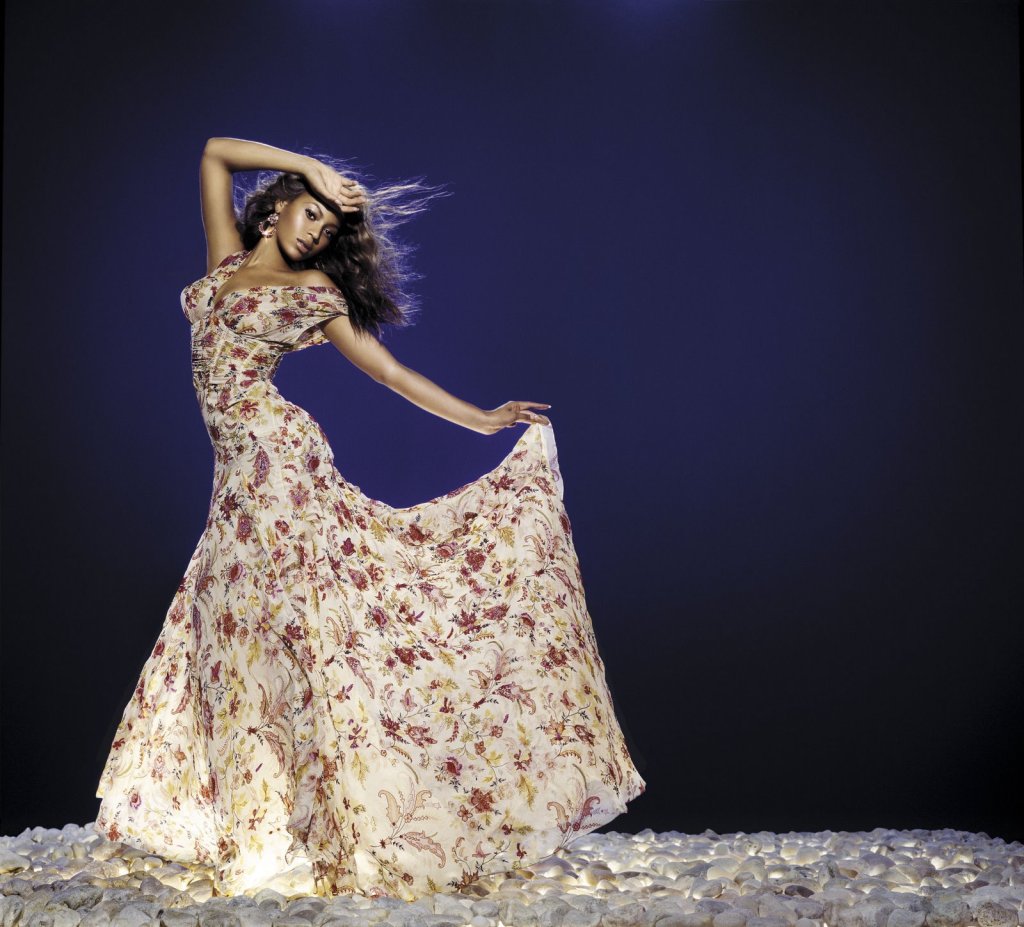
The album cover makes this clear. Beyoncé’s body is exposed, but the image does not communicate fragility. The jewelled top operates almost like armour, turning sensuality into a display of value, control, and protection. The image introduces her as glamorous and sexually mature without making her appear inexperienced. The same balance structures the “Crazy in Love” video. Her movement appears spontaneous, exact, and physically liberated, and every gesture remains precise. The apparent abandon is produced through mastery. Beyoncé can perform freedom because the discipline underneath it is never in doubt.
“Dangerously in Love” adopts the codes of adulthood without creating psychological proximity. The album does not invite the audience into the interior of adult life. Instead, it presents its external signs: the romantic relationship, the vocal seriousness, the expensive styling, the collaborations with established artists, and the control of the stage. Together, they create a completed image of young womanhood without exposing the uncertainty or vulnerability beneath it.
The promotional campaign reinforces the impression of readiness. The album is carried for more than a year through singles, festivals, televised appearances, award shows, and an expanding live repertoire. Beyoncé’s stagecraft begins to emerge as an independent argument. The later maximalism is not yet fully developed, but the essential structure is already present. She treats the stage as a place where preparation becomes visible.
“Live at Wembley” presents a performer who does not approach solo stardom as an experiment. The arrangements, transitions, gestures, costume changes, vocal decisions, and choreography suggest that the uncertainty of the career transition must remain hidden from the audience. Beyoncé may still be establishing her place industrially, but she refuses to appear transitional artistically. The performance has to communicate that she was ready before the opportunity arrived.
This readiness emerges from more than professional temperament. Beyoncé is the daughter of Southern Black parents shaped by the Civil Rights Movement and by the social possibilities that followed it.
For many Black middle-class families, especially those raising daughters, preparation became a form of protection. The child had to be more disciplined, more educated, more polished, and more prepared because equal treatment could not be assumed. Racism might not disappear, but its opportunities to act could perhaps be reduced. Perfection could close some of the openings through which prejudice entered. Excellence was not simply an aspiration. It was a defence.
Beyoncé’s early image is inseparable from this ideology of Black Excellence. Her intense rehearsals, controlled interviews, polished performances, limited public spontaneity, and almost complete refusal to appear unprepared are not merely signs of an unusually exacting personality. They reflect a generational instruction. A Black woman entering the highest levels of popular culture could not rely on being granted innocence, forgiveness, or the freedom to fail publicly. She had to arrive already formed.
Her curation therefore performs racial work. The completed image attempts to create a space in which achievement might temporarily precede projection. If the vocals are undeniable, the performance faultless, the body disciplined, the campaign sustained, and the public behaviour controlled, then perhaps racism can be made less effective. Excellence may provide temporary shelter from some of its consequences.
“Dangerously in Love” is the first full articulation of that strategy. Beyoncé does not introduce herself through uncertainty because uncertainty would weaken the protection Destiny’s Child had built around her. She does not reveal the difficulty of the transition. She conceals it beneath preparation.
As a debut, “Dangerously in Love” is therefore a presentation rather than an introduction. Beyoncé is not discovering who she might become in public. She arrives with the completed image of a young adult woman whose preparation is meant to make her position appear inevitable, even though the failures preceding the album had already shown that it was not. Destiny’s Child gave her protection, but the solo career still required proof. The album provides it.
“Dangerously in Love” does not offer vulnerability. It offers evidence.
 Elemental Emancipation
Leave a comment