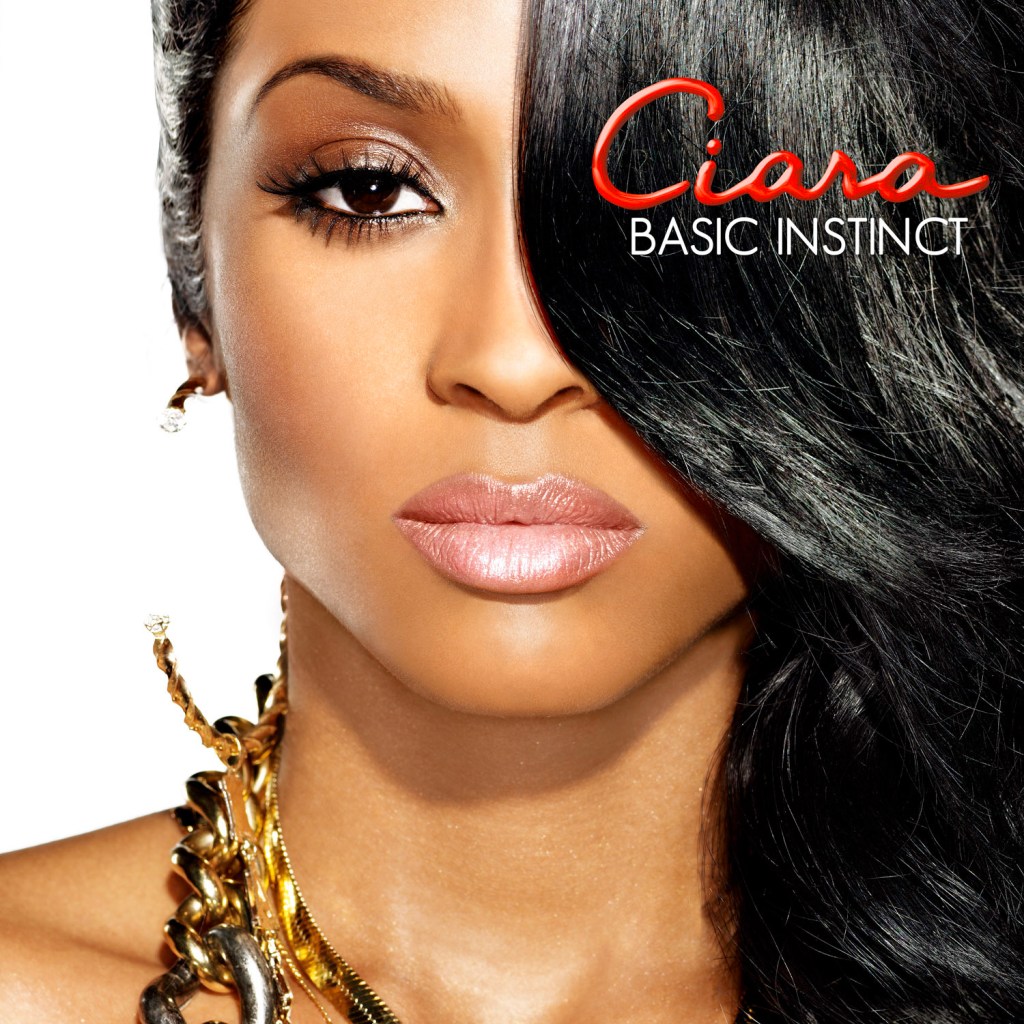
Basic Instinct – The Retrenchment
By 2010, the musical environment surrounding Ciara had changed considerably from the one that had enabled her emergence six years earlier. When Goodies was released, rhythmic radio, urban radio, music television, and the physical album market still formed a relatively coherent system. A young R&B performer could enter through a distinctive single, develop familiarity through repeated video rotation, and convert that visibility into album sales. Ciara’s early work was particularly compatible with this structure. Her voice, sound, choreography, and image circulated together, allowing the body to complete what the recording introduced.
That framework was becoming increasingly difficult to sustain. Rhythmic radio was moving more decisively towards pop and electronic dance music, while urban radio was increasingly dominated by male hip-hop. The distinction between rap, R&B, and pop had not disappeared, but mobility across those categories was distributed unevenly. Male rappers and singers could move towards pop without necessarily losing their original authority. T-Pain’s vocal style had already become part of the general language of mainstream music, allowing him to circulate across rap, R&B, and pop collaborations. Nelly could release a melodic record such as “Just a Dream” and treat pop balladry as an extension of his career rather than a departure requiring justification.
Ciara did not possess the same freedom. Her attempt to move towards pop on Fantasy Ride had weakened the clarity of her position without creating a replacement strong enough to sustain her. Yet returning to urban R&B could no longer restore the conditions that had supported her first albums. She was caught between two formats that increasingly valued different parts of her. Pop could absorb choreography, sexuality, and dance spectacle, but not necessarily the Southern Black musical identity through which Ciara had first become legible. Urban radio could recognise her connection to hip-hop, but offered decreasing space to a female performer whose authority depended on dance-led R&B rather than vocal virtuosity or direct rap participation.
It is within this environment that Basic Instinct emerges. After the diffusion of Fantasy Ride, the album attempts to retrieve Ciara’s musical lineage. The title presents this return as natural and essential, as though the previous pop expansion had been an interruption and the urban performer had remained the authentic centre beneath it. The objective is clarity. Ciara is repositioned as close as possible to hip-hop, rhythmic production, bodily control, and the restrained vocal delivery established on Goodies and expanded on The Evolution.
The decision is understandable. Fantasy Ride had attempted to establish several possible futures at once, distributing Ciara across numerous collaborators, sounds, markets, and visual ideas. Basic Instinct removes much of that ambiguity. The number of collaborators is reduced, the sonic palette becomes narrower, and the relationship between her voice and the production becomes more familiar. Ciara no longer appears to be searching for external validation through global pop. She is presented as someone reclaiming the territory from which she had been displaced.
However, the return is defensive rather than expansive. The album spends considerable energy demonstrating that Ciara still belongs to urban music, even though the category itself has changed. Authenticity becomes something that must be declared because it can no longer be assumed. The project retrieves the original code without asking sufficiently what that code could become under new conditions.
This creates the central contradiction of Basic Instinct. The album restores Ciara’s identity, but it cannot restore the infrastructure that once made that identity commercially powerful.
The sonic architecture reflects this contraction. The limited creative circle gives the project greater continuity than Fantasy Ride. The songs are organised around percussion, repetition, restrained melodies, sparse arrangements, and enough physical space for Ciara’s performance language to remain visible. Her voice does not compete with the production. It moves within the rhythm, returning to the relationship between sound and body that had defined her strongest work.
Yet the consistency frequently becomes repetitiveness. Similar production templates, lyrical assertions, and rhythmic structures recur without each song acquiring a sufficiently distinct function. On Goodies, minimalism corresponded to novelty. The sparse beats created a space in which Ciara’s difference could be immediately recognised. On Basic Instinct, comparable restraint operates in a market where the original novelty has disappeared. The same economy of sound can therefore appear less like concentration than limitation.
The album gives the impression of having been developed under pressure. Its narrowness does not always feel like the result of a complete artistic decision. It often suggests the compression of Ciara’s entire identity into a small number of repeated ideas: bodily command, desirability, urban credibility, competitive superiority, and resistance to replacement. Where Fantasy Ride had too many possible directions, Basic Instinct risks reducing the range too severely.
The album sounds less distilled than compressed.
This difference is also audible in the lyrics. The themes remain close to those established on Goodies and The Evolution. Ciara continues to address sexuality, independence, attraction, confidence, competition, and the control of access to her body. However, the lightness that had accompanied these themes largely disappears.
On Goodies, refusal operated within a playful structure. The songs allowed Ciara to participate in teenage flirtation while retaining control over its outcome. Her authority did not require constant explanation because the cultural momentum surrounding her confirmed it. On The Evolution, sensuality became slower and more adult, while gender could be reorganised through choreography. The body remained a space of experimentation as much as control.
On Basic Instinct, similar ideas acquire a harder surface. Ciara repeatedly asserts that she remains desirable, dominant, relevant, and irreplaceable. Confidence becomes more explicit because her position is no longer institutionally secure. The lyrics do not simply express self-assurance. They respond to the possibility that the public, the label, or the industry no longer accepts that assurance as self-evident.
This change in tone reflects a change in material conditions. Lightness had been possible when the machinery surrounding Ciara amplified her authority. Defensiveness appears once she is required to confirm it herself.
“Ride” represents the strongest resolution of these tensions. The song returns to the slow, bodily sensuality that had made “Promise” one of the central records of The Evolution, but it removes some of that song’s romantic framing. The production is sparse, the vocal delivery remains controlled, and the body becomes the primary source of meaning. Ciara is not attempting to compete through vocal force or narrative complexity. She controls the record through timing, posture, repetition, and physical precision.
The visual reinforces this structure. “Ride” presents Ciara almost entirely through bodily command. The choreography is athletic and sexual, yet the sexuality remains organised through control rather than availability. The performance does not require an elaborate concept because Ciara herself constitutes the event.
In artistic terms, the song confirms that the original language still functions. Ciara remains capable of making restraint feel physical and turning choreography into an extension of the recording. The problem is no longer whether she can produce a recognisable Ciara record. The problem is whether recognition can still be converted into an album campaign.
By this point, the relationship between video, audience, and commercial success had changed. Ciara’s early career had depended heavily on music television, particularly spaces where videos were programmed repeatedly and placed before audiences who had not actively searched for them. MTV, BET, and other video channels allowed the song, choreography, and persona to circulate together. The repetition of the image produced familiarity, and familiarity could gradually expand the audience.
YouTube offered a different form of visibility. Videos became permanently available, but availability did not guarantee exposure. The audience increasingly had to search for the performance, receive it through a link, or encounter it through an existing network of interest. This transition was especially consequential for Ciara because her music was not fully contained within the audio recording. Choreography completed the proposition.
Ciara entered the digital-video period with a body constructed for television rotation. YouTube preserved the performance, but it did not ensure that the wider public would encounter it.
“Ride” could therefore attract attention without rebuilding the album. The audience could watch the video repeatedly, download the individual song to an iPod, and consume Ciara as a visual and single-based performer without purchasing Basic Instinct. The track did not fail to connect. Its connection no longer had to pass through album ownership.
This exposes a weakness that had been present throughout Ciara’s career. Her audience had been built primarily through singles, choreography, youth culture, and immediate visual recognition. As that audience grew older, it did not necessarily develop the habit of treating each Ciara album as a complete statement requiring purchase. The attachment remained, but it became fragmented. Listeners could retain affection for Ciara, remember the performances, and consume the strongest single while allowing the wider project to pass without sustained engagement.
The silver certification of Basic Instinct in the United Kingdom complicates the idea of complete rejection. The album was still being bought where Ciara retained recognition and where the project reached an existing audience. The difficulty was that she was no longer being systematically presented to the wider public. Radio support was limited, the promotional scale had contracted, and music television no longer provided the same repeated exposure.
The distinction between rejection and invisibility is therefore important. The album did not enter a fully functioning system and fail to persuade everyone within it. The system itself was no longer placing Ciara before the public with the same consistency.
The visual campaign makes this withdrawal increasingly visible. The simplicity of the videos corresponds partly to the album’s stripped-back positioning, but it also reflects reduced institutional support. Ciara’s body is expected to carry the campaign with fewer resources, smaller concepts, and less promotional amplification. The fact that elements of the visual production were self-funded exposes the change in the relationship between performer and label.
During the first albums, the institution amplified Ciara’s body. On Basic Instinct, the body is increasingly expected to replace the institution.
This is particularly damaging because visual performance was not an optional addition to her work. For a vocalist whose authority rests primarily in the recording, reduced video investment may limit promotion without altering the central artistic proposition. For Ciara, the weakening of visual infrastructure removes part of the language through which the music becomes complete.
The withdrawal also intersects with the racial organisation of the emerging dance-pop mainstream. By the end of the 2000s, labels were pushing a new group of female performers towards global electronic pop. Yet the women most easily allowed to occupy the position of universal dance-pop figure were frequently white, lighter-skinned, or racially ambiguous enough to move towards conventional pop without their racial identity being treated as a restriction on category.
Colourism did not begin with this period, but it acquired a different function within the dance-pop economy. Lighter skin could facilitate movement between urban credibility, fashion imagery, electronic production, and mainstream pop recognition. Darker-skinned Black women were more likely to remain associated with narrower genre expectations, even when their performance abilities were directly compatible with the expanding importance of dance.
Ciara’s relationship to pop was consequently conditional. She could participate in crossover records, but she was not granted the same presumption that pop could become her permanent territory. After one incomplete attempt with Fantasy Ride, the pressure to return to her lane intensified. The project was treated less as a transitional album that required refinement than as evidence that Ciara had moved beyond the position where she properly belonged.
The response was harsher than it might have been for other performers because the failure confirmed an existing racial boundary. White and lighter-skinned singers could release uneven albums, adopt Black production, move into dance music, or adjust their sound across several campaigns without every change becoming a referendum on their right to remain within pop. Ciara was expected to correct the direction immediately.
Basic Instinct therefore operates simultaneously as reclamation and containment. It allows Ciara to recover a recognisable relationship between sound and body, but it also returns her to the category the industry had assigned to her, even as that category was losing power.
The severity of the album’s reception cannot be separated from this contradiction. Fantasy Ride had been criticised for diffusion, but Basic Instinct corrected the diffusion. It was more coherent, more recognisably urban, and more clearly built around Ciara’s established strengths. Yet this clarity did not improve its commercial position. The album solved the problem of legibility after legibility had ceased to guarantee circulation.
The repetitive structure also weakened its ability to generate an afterlife. “Ride” survives as a representative object because its physical and visual proposition remains immediate. The wider album offers fewer differentiated points of entry. Its songs frequently circle the same sonic and lyrical territory, making it more difficult for individual tracks to acquire independent identities through later playlisting, rediscovery, or social media circulation.
The digital period preserved “Ride” while allowing Basic Instinct to disappear.
The absence of substantial revisitation on streaming platforms does not mean that the album had no audience. It indicates that the project was never canonised. Streaming does not recover every catalogue equally. Older albums are sustained through playlists, anniversaries, editorial placement, critical narratives, viral circulation, or continued label investment. Basic Instinct received little of this secondary construction. Once the original campaign ended, the album was largely left outside the public narrative of Ciara’s career.
This absence reinforces the commercial interpretation that the public had rejected Ciara, even though “Ride,” the British certification, and the continued visibility of her choreography suggest something more complex. The audience existed, but it was dispersed across videos, singles, territories, digital files, and memories. It no longer appeared through the concentrated album sales by which label commitment was being judged.
The consequence was the end of Ciara’s relationship with the label structure that had launched her career. This separation reflected more than the commercial performance of one album. Across Fantasy Ride and Basic Instinct, Ciara had apparently failed in both directions available to her. The pop expansion had not produced a stable crossover identity, while the return to urban R&B had not restored her previous commercial scale.
The institutional interpretation was that Ciara herself had become difficult to sustain. The structural interpretation is different. Rhythmic radio no longer supported the position from which she had developed, urban radio had become more male-dominated, music television had lost its centrality, digital consumption allowed audiences to separate songs from albums, and colorist expectations limited the ease with which a dark-skinned Black woman could be reconstructed as a global pop performer.
The ground had disappeared, but the disappearance of the ground was interpreted as the disappearance of Ciara.
Her release from the label consequently marks a transition in the terms of her career. The institution no longer treats her as an artist whose next position must be developed through sustained investment. From this point forward, Ciara increasingly has to demonstrate viability through individual records before receiving the resources required to construct a complete era.
Basic Instinct proves that Ciara still understands her original language. “Ride” confirms that the connection between voice, rhythm, sexuality, and choreography remains intact. The difficulty is that this language no longer occupies the same position within mainstream music. Pop has absorbed dance spectacle, hip-hop has expanded its control over rhythmic formats, and digital consumption has weakened the connection between visual attention and album commitment.
The album therefore does not represent a simple failure to return. It reveals the impossibility of returning to a historical position after the structures that produced it have been dismantled. Ciara recovers coherence, but coherence cannot compensate for the withdrawal of circulation, investment, and institutional belief.
Fantasy Ride had shown that the industry could not build a convincing new format around her. Basic Instinct demonstrates that the previous format no longer exists either.


 Elemental Emancipation
Leave a comment