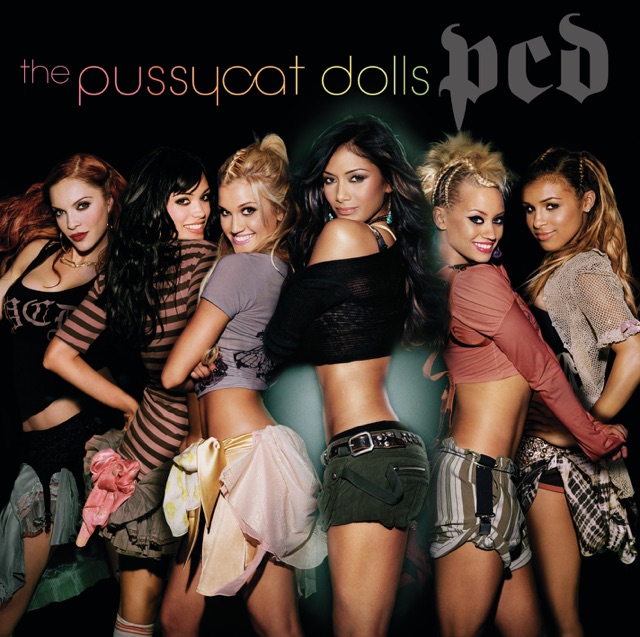
PCD – The Product
When Robin Antin created the Pussycat Dolls as a burlesque troupe in Los Angeles, the possibility of transforming the concept into a global recording act was not necessarily apparent. The original formation belonged to nightlife rather than popular music, reviving the codes of cabaret through a rotating cast of dancers, guest singers and celebrities. Yet the structure already contained the foundations of a musical project. It placed one woman at the centre, surrounded her with additional vocalists and dancers, and used the collective body to magnify the presence of the lead. By the time the Pussycat Dolls entered the recording industry, the concept did not need to be reinvented. It only needed to be adapted.
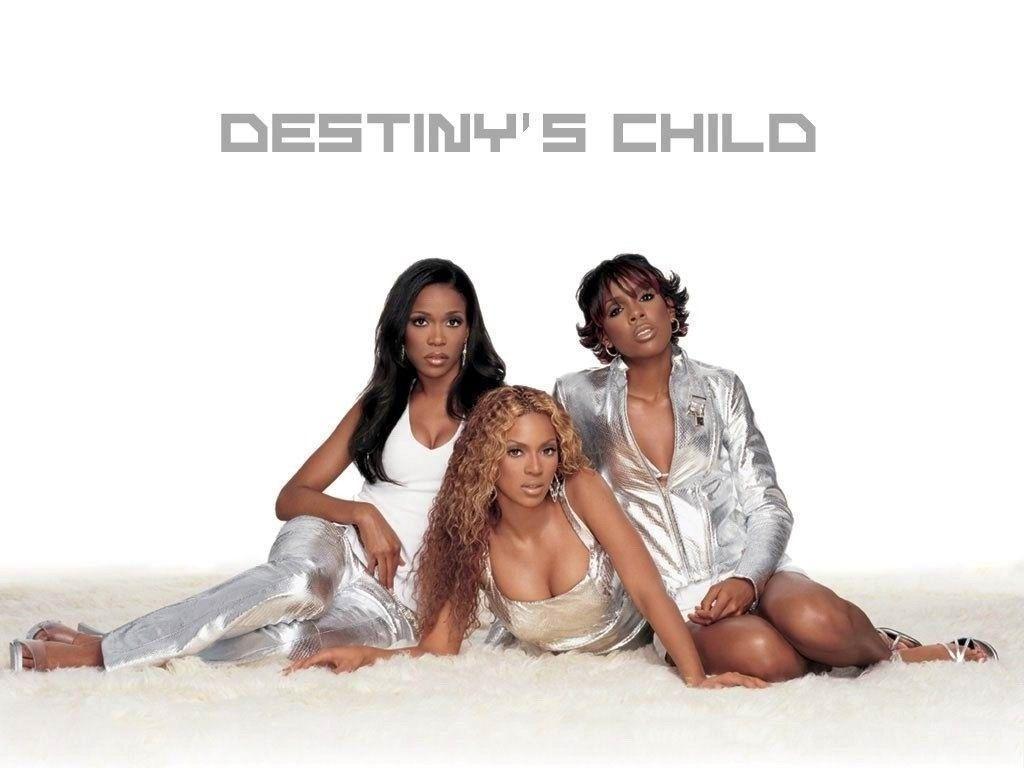
This adaptation occurred at a particular moment in the history of the girl group. By the middle of the 2000s, the format was receding from the Anglo-American mainstream. The Sugababes and Girls Aloud remained significant in the United Kingdom, but both belonged to an existing British continuity rather than announcing a wider revival. Destiny’s Child were completing their transition from group to individual stardom, while the American industry increasingly organised female pop around solo performers. The musical landscape that had once supported several simultaneous girl groups no longer appeared interested in developing new ones.
The Pussycat Dolls succeeded because they did not attempt to restore the traditional model. They retained the visual abundance of a group while eliminating much of the complexity associated with one. There would be no need to establish six distinct musical personalities, distribute songs evenly or convince the public that each member occupied an equivalent position. Nicole Scherzinger was the lead singer, Melody Thornton and Carmit Bachar provided additional vocal texture, and the remaining members completed the visual formation. The hierarchy was not a deterioration that occurred after success. It was present at the moment of construction.
The choice of Nicole Scherzinger was therefore one of the simplest decisions within the project. She had already experienced the manufacturing process of television pop through Eden’s Crush, had been considered for the female position in the Black Eyed Peas and possessed an intense determination to become the central female voice of a successful formation. The Pussycat Dolls offered her the position she had repeatedly approached without fully securing. She was not asked to disappear into a collective. The collective was designed to intensify her.
This distinguished the Pussycat Dolls from earlier groups in which one member gradually became dominant. The Supremes, Destiny’s Child and several other formations had demonstrated how commercial attention could progressively reorganise a group around its most marketable figure. The Pussycat Dolls began where those stories usually ended. Nicole’s predominance was neither concealed nor presented as a temporary consequence of the first single. Her voice carried almost the entire album, her face occupied the centre of the imagery and the choreography repeatedly redirected attention towards her. The other members were visible, but visibility did not imply musical equality.
The arrangement was often described as dysfunctional, yet it was remarkably functional for the purpose for which it had been created. It allowed the label to combine the clarity of a solo artist with the spectacle of a group. Nicole supplied the voice, ambition and recognisable centre. The other Dolls multiplied the image around her, turning one performer into a complete visual environment. The audience was not required to identify with six narratives. It was given one star and five extensions of the brand.
This organisation also reflected the influence of reality television on the culture surrounding the group. The Pussycat Dolls were not formed through a televised competition, but they appeared in an environment increasingly accustomed to visible hierarchies among performers. Programmes such as “American Idol”, “America’s Next Top Model” and “Making the Band” encouraged audiences to understand entertainment as a process of selection in which many participants could be present while only one was expected to prevail. The group reproduced this logic without requiring a competition. Nicole already occupied the position of the winner.
Robin Antin’s later attempts to reproduce the formula through reality television exposed the structure more clearly. The search was not for a self-contained vocal group capable of developing a shared identity. It was for women who could enter an established system, occupy predetermined functions and sustain a brand whose meaning existed before them. The Pussycat Dolls could therefore be replicated in theory because the individual members were not supposed to redefine the concept. They were supposed to embody it.
The group’s diversity nevertheless represented a genuine departure from the visual uniformity that had shaped many earlier formations. The Pussycat Dolls brought together women from visibly different racial and ethnic backgrounds without turning this diversity into the explicit subject of the campaign. Their image suggested an ease of coexistence that the industry had rarely attempted to create on this scale. Yet it is significant that this proposition emerged from Robin Antin’s burlesque project rather than from the record industry itself. The mainstream had spent decades constructing female groups through narrow racial categories.
The inclusiveness of the image therefore existed beside a rigid hierarchy of function. More kinds of women could be represented, but representation did not translate into equal access to the voice. The group widened the visual field while narrowing the musical centre. This contradiction was not incidental. It captured the particular form of progress that the entertainment industry was prepared to accommodate: diversity could become expansive when control remained concentrated.
The music on “PCD” followed the same logic of immediate functionality. The album contains an unusually high number of covers and reinterpretations, suggesting that the priority was not the development of a coherent musical identity intended to unfold across several projects. Almost every major original composition became a single, while the remainder helped connect the album to the cabaret and performance traditions from which the group had emerged. The project feels less like the beginning of a discography than a complete demonstration of the concept. It was constructed to prove that the Pussycat Dolls could exist as a recording act, not necessarily to establish the artistic foundations of a long-term group.
The extraordinary length of the rollout concealed this limitation. Six singles extended the album’s presence across almost two years, allowing the group to appear more durable than the material itself initially promised. The campaign moved between provocation, romance and independence with enough precision to reach several audiences at once. “Don’t Cha” established desirability as competition. “Stickwitu” softened the group through emotional loyalty. “Beep” transformed sexual language into playful censorship. “Buttons” returned the group to the visual codes that most clearly distinguished them, while “I Don’t Need a Man” supplied the rhetoric of autonomy necessary to prevent the proposition from being reduced entirely to seduction.
The tension between “Don’t Cha” and “I Don’t Need a Man” is central to the album. One presents the female body through its capacity to attract and destabilise male attention. The other insists that a woman’s confidence does not depend on romantic possession. These positions were not treated as incompatible. The Pussycat Dolls offered the fantasy of being desired while assuring female listeners that desirability could coexist with independence. Their music did not attempt to escape the male gaze. It repositioned life within it as a form of power.
This was characteristic of the period. Female empowerment was frequently expressed through the ability to command attention without appearing controlled by it. The woman remained the object of the gaze, but she was told that recognising her effect on men transformed objectification into agency. The distinction could be maintained at the level of the lyrics even when it was less convincing within the production itself. The women performing the material had limited control over the structure, sound and imagery through which this supposed autonomy was communicated.
The difficulty of describing the Pussycat Dolls as an empowering project therefore does not arise from the amount of sexuality they displayed. In comparison with later popular music, their material was rarely explicit. “Don’t Cha” is based on flirtation, “Beep” replaces sexual language with innuendo and even “Buttons” relies more on movement and suggestion than direct representation. The group were conventionally attractive women performing playfully within the visual expectations of the era. Their historical specificity lies less in what they showed than in the direction from which the image was organised.
The Pussycat Dolls performed for the gaze without making the gaze itself unstable. Their videos did not parody the fantasy, expose its artificiality or create an obvious distance between the women and the roles they occupied. The performances were serious. Even at their most playful, the group did not appear to be laughing at the construction surrounding them. They asked the audience to accept desirability as a complete and coherent identity.
The Pussycat Dolls belonged to an earlier configuration. Their sexuality was neither especially extreme nor transgressive. It was sincere. The women did not need to explain that the performance was knowingly constructed because the surrounding culture still treated polished female desirability as an uncomplicated aspiration. The seriousness with which they performed is precisely what separates them from much of the culture that followed.
This seriousness also placed them within the broader escapism of the 2000s. American entertainment projected a world of pleasure, beauty, consumption and controlled excess at a moment when the country itself was becoming more conservative and security-conscious. The contradiction strengthened its soft power. The United States could export images of sexual confidence and personal freedom that exceeded the behaviour ordinarily tolerated from women in everyday life. The women on screen could be playful, commanding and visibly desired, while women outside that fantasy continued to face strong expectations of respectability.
The Pussycat Dolls embodied this distance between representation and social permission. Their freedom was spectacular rather than ordinary. It existed under choreography, lighting and professional management. It was acceptable because it remained within the controlled space of entertainment, where female sexuality could be consumed without necessarily altering the standards applied to women elsewhere.
The intended audience complicates the proposition further. The group originated in burlesque and retained many of its aesthetic codes, yet its music circulated through radio, music television and commercial channels whose audiences included teenage girls. Adult nightlife was not merely referenced. It was reformulated as youth-oriented aspiration. The Pussycat Dolls arrived during a period in which the boundaries separating late adolescence, young adulthood and adult femininity had become increasingly unstable. Teenagers were encouraged to adopt adult codes earlier, while grown women were dressed through styles associated with adolescence. Popular fashion compressed the visual distance between seventeen and twenty-seven.
The group occupied that ambiguity perfectly. The Dolls were adult women, but the product did not speak exclusively to adult experience. It offered teenage listeners an image of the woman they might become, defined primarily through beauty, confidence and the ability to attract attention. Desirability became less a dimension of adulthood than its most visible proof.
This helps explain why the Pussycat Dolls appear more historically distant than their music alone would suggest. Contemporary popular culture can be considerably more sexually explicit, but it has also become more suspicious of the conditions under which sexuality is marketed to younger audiences. Society has not simply moved towards greater permissiveness. In several respects, it has become more prudish, particularly when the presumed audience includes children or teenagers. Concerns surrounding social media, body image, exploitation and exposure have reintroduced boundaries that the commercial optimism of the 2000s had progressively weakened.
This renewed prudishness does not contradict the greater explicitness of contemporary music. Sexual expression is more readily accepted when the performer appears to control its production, define its meaning and address an audience capable of understanding its terms. At the same time, relatively restrained material can provoke discomfort when the image appears externally imposed or strategically directed towards adolescents. The central question has shifted. It is no longer only what is being shown, but who chose it, who profits from it and to whom it is being sold.
The Pussycat Dolls emerged before those questions became unavoidable. Their success depended on a culture willing to interpret the performance primarily through its surface. The machinery of the group was visible, but it did not prevent the fantasy from functioning. Audiences knew that Nicole sang most of the material. They could see that the other members occupied subordinate positions. They understood that the project had been assembled. None of this initially weakened the product because authenticity was not what the group promised.
What it promised was efficiency. One voice, several bodies, immediate recognition and a repertoire flexible enough to alternate between romance, seduction and independence. The group did not need to resolve the contradiction between feminism and the male gaze because the culture surrounding it did not yet require that resolution. It was sufficient to suggest that a woman could be desired without being possessed, even when the image through which this freedom was expressed remained largely controlled by others.
“PCD” was therefore more than the debut album of a successful group. It was the culmination of a particular understanding of female pop, one in which diversity could coexist with hierarchy, independence with objectification, and teenage aspiration with imagery inherited from adult nightlife. The album transformed these contradictions into a coherent commercial proposition and prolonged that proposition until the Pussycat Dolls appeared less like an experiment than a permanent fixture of popular culture.
They were not the most sexual performers of their era, nor would they be the last women to build a career around desirability. They were instead among the final major products of a period in which the male gaze could remain the central organising structure of female pop without requiring visible authorship, irony or explanation from the women placed inside it. The product succeeded because the contradictions were not hidden. They had simply not yet become disqualifying.
 Elemental Emancipation
Leave a comment