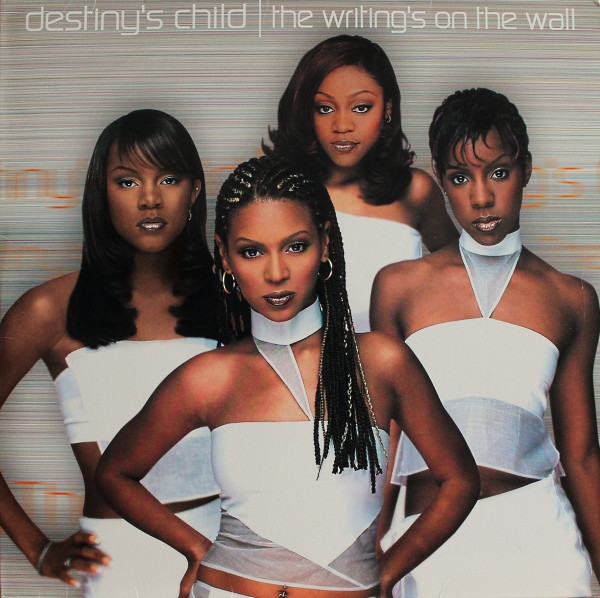
The Writing’s on the Wall – The Assertion
By 1999, Destiny’s Child were no longer operating from a position of entry. Their debut had established them as credible contemporary R&B performers, proving that they possessed the vocal discipline, professionalism and cultural grounding required to survive within the industry. It had also revealed the limitations of qualification. The group could execute an inherited language, but it had not yet developed a coherent perspective of its own. “The Writing’s on the Wall” begins where that process ends. Destiny’s Child no longer sound as though they are demonstrating their ability to follow established rules. They begin writing them.
The wider market had also changed. The success of Britney Spears, the Backstreet Boys and NSYNC had returned teenagers to the centre of the American record industry. This renewed attention was supported by considerable purchasing power. In 1998, Americans between the ages of twelve and nineteen reportedly spent $94 billion of their own money, derived from work, allowances and gifts, while influencing billions more in family purchases. Adolescents were no longer treated merely as future adult consumers. They represented an economic constituency capable of sustaining albums, magazines, videos, fashion and an entire celebrity economy in the present.
Black teenage performers were not new to this market. Brandy, Aaliyah and Monica had already demonstrated that young Black women could sustain major careers. Yet their youth did not always determine the language of their music. Aaliyah and Monica frequently performed material situated within emotional traditions inherited from adult R&B, while Brandy moved more visibly between adolescent experience and conventional romantic seriousness. “The Writing’s on the Wall” marks a further development. The performers’ age begins to organise the vocabulary, humour, technologies and social situations of the album itself.
Destiny’s Child finally sound like teenagers, not because the material becomes juvenile, but because adolescence is no longer filtered through an older idea of maturity. The album recognises pagers, repeated telephone calls, borrowed cars, nights out, changes in tone and conversations among friends as experiences worthy of musical authority. Its language does not resemble adults constructing an abstract version of youth culture from outside. It draws from an idiom that young people already use to interpret their lives.
This shift is inseparable from the expansion of the creative team. Kandi Burruss and Kevin “She’kspere” Briggs, arriving after the success of TLC’s “No Scrubs,” contribute to five tracks and help establish the album’s most recognisable language. Missy Elliott produces and writes “Confessions,” Rodney Jerkins brings the dense rhythmic tension of “Say My Name,” and the members themselves receive greater songwriting responsibility. Female authorship does more than alter the gender balance behind the scenes. It allows the conversations of young Black women to become the organising material of a mainstream album.
The result sounds considerably younger than the debut, even as it displays greater artistic maturity. The group no longer needs to approximate adulthood in order to appear serious. It discovers authority within its own generational environment. This is the album’s first assertion: the social knowledge of Black girls does not require translation into an older register before it can be commercially valuable.
Sonically, “The Writing’s on the Wall” participates in the futuristic turn reshaping R&B at the end of the decade. TLC, Aaliyah, Missy Elliott and other artists had helped move the genre toward disjointed beats, synthetic textures and visual worlds dominated by technology, metallic surfaces and imagined futures.
Destiny’s Child adapt this modernity to the girl-group form. The smoother neo-soul textures of the debut recede, replaced by sharper percussion, abrupt transitions and productions in which vocals function rhythmically as much as melodically. Phrases begin, stop and return in altered forms. Questions collide with responses. Harmonies provide emphasis rather than simply warmth. The songs sound like conversations organised into machinery.
“She Can’t Love You” stands apart because it remains closer to the continuous emotional language of older R&B. Its smoother construction makes the surrounding shift easier to hear. Across much of the album, Destiny’s Child are no longer singing over tracks designed primarily to showcase vocal beauty. Their voices become part of the beat. They move between melody, speech and rap-inflected phrasing, developing the staccato delivery that would influence R&B long after the album’s release.
This production gives the album its atmosphere of vigilance. The women listen for inconsistencies, compare actions with promises and react to sudden changes. Intimacy takes place through communication technologies that provide access without guaranteeing honesty. A telephone can sustain a relationship, expose deception or become a mechanism of intrusion. The futuristic sound is therefore not simply decorative. It reflects a social world in which young women must remain attentive to how men use new forms of access.
The album formalises this process through its commandments. Its title evokes both warning and inscription: the outcome is already becoming visible, but the rules through which it will be understood must still be written. Destiny’s Child borrow the structure of religious law and redirect it toward everyday heterosexual relationships. Young women, traditionally positioned as the objects of moral regulation, begin regulating the conduct of men.
This reversal is more significant than a general message of empowerment. On the debut, the girls had been expected to demonstrate emotional maturity without controlling its definition. Here, they claim the authority to interpret events themselves. They identify evidence, establish standards and determine when a violation has occurred. The album moves from qualification to jurisdiction.
“Say My Name” begins with a discrepancy. A man’s behaviour no longer corresponds to the pattern the woman recognises, and she refuses to distrust her own observation. His change of tone becomes evidence. “Bug a Boo” rejects the assumption that male desire automatically creates a right of access to a woman’s time, movements and attention. “Jumpin’, Jumpin’” treats female leisure as sufficient in itself, allowing women to occupy public space without organising their social lives around waiting for male permission. The songs create a vernacular law governing truth, privacy, effort and pleasure.
“Bills, Bills, Bills” becomes the political centre of this system because it gives the woman who provides support the authority to measure what that support costs. The male figure uses her car, consumes her resources and endangers her financial stability while refusing the responsibilities of partnership. The song is often reduced to materialism, as though the woman’s concern with money reveals shallow values. This interpretation protects the man from scrutiny. His access to her resources appears natural, while her decision to account for that access becomes morally suspicious.
The song reverses a much older musical and social arrangement. In Ray Charles’s “I’ve Got a Woman,” the ideal woman provides money, care, loyalty and domestic reassurance. Her value is measured through her usefulness to the man. “Bills, Bills, Bills” retells that relationship from the provider’s position. The supportive woman begins keeping records.
This carries particular force when performed by Black women. Their labour has historically crossed the boundaries between employment, domestic service, emotional care and community survival. They have been expected to support households, institutions and social movements while receiving inadequate protection in return. Malcolm X’s description of the Black woman as America’s most disrespected, unprotected and neglected person identified this contradiction.
“Bills, Bills, Bills” makes that contradiction intimate. The woman is valued while her resources remain available. Once she questions the unequal exchange, she becomes demanding. The accusation of materialism therefore functions as a form of discipline, encouraging women to continue subsidising relationships without examining how value is distributed.
The song does not condemn a man simply for earning less. Its target is the refusal of reciprocity. Economic inequality can exist within a relationship without becoming exploitation, but exploitation begins when one person’s labour is treated as an entitlement rather than a contribution. The song gives the Black woman the right to audit an arrangement she has been expected to maintain silently.
This logic extends across the album. “Say My Name” audits honesty. “Bug a Boo” audits access. “Hey Ladies” turns private disappointment into collective deliberation. The commandments operate like a ledger through which conduct becomes measurable. Destiny’s Child do not merely express hurt. They identify the terms under which intimacy becomes acceptable.
The group format strengthens this authority. A solo singer might present an individual complaint, but the harmonies make interpretation sound collective. Private experiences are compared among women until a pattern emerges. The listener is invited to understand that the problem is not necessarily her personal failure to manage a relationship correctly. Other women recognise the behaviour because they have encountered it too.
The album thus functions as a form of popular feminist education without requiring the language of political theory. It gives listeners phrases that can circulate beyond the songs and be applied to their own lives. A “bug a boo” becomes a social category. “Say my name” becomes a test. “Bills, bills, bills” becomes an accusation immediately understood without explanation. The music succeeds partly because it does not invent a language with which adults might address young people. It gives commercial authority to language already circulating among them.
This authority is protected by the album’s religious framing. Christianity functions not simply as reassurance for parents, but as a source of legitimacy. The commandments allow young Black women to assert boundaries without being positioned automatically as immoral, hostile or sexually unruly. Their judgements do not appear as arbitrary demands. They are presented as principles.
The visual campaign enlarges this world. By the end of the 1990s, videos had become major cultural objects capable of remaining in television rotation for months. MTV, BET and programmes such as Total Request Live turned fashion, choreography and production design into extensions of the music itself. The scale and conceptual clarity of the videos for The Writing’s on the Wall indicate that Columbia now regarded Destiny’s Child as capable of sustaining a complete visual era rather than a single breakthrough hit.
“Bills, Bills, Bills” places its argument inside a beauty salon, linking the song’s female conversation to a Black social and commercial institution. The salon is simultaneously a workplace, a site of entrepreneurship and a space where women exchange knowledge. The setting brings together the family infrastructure established by Tina Knowles, the female authorship of Kandi Burruss and the song’s concern with the value of women’s resources.
“Bug a Boo” converts unwanted pursuit into kinetic comedy, while “Jumpin’, Jumpin’” presents nightlife as a sphere of youthful freedom. “Say My Name” uses colour-coded rooms, fashion and controlled choreography to transform suspicion into visual precision. The videos do not merely illustrate the songs. They establish Black girls as hip, modern and capable of defining what the wider youth market will imitate.
This specificity is central to the album’s crossover. Destiny’s Child do not become more accessible by suppressing the Blackness of their language. Their phrases, rhythms and visual codes travel outward from Black youth culture into the mainstream. Black girls are positioned not only as consumers of what is current, but as one of its principal sources.
The commercial response confirmed that this language could sustain more than an R&B success. The album produced four major singles, expanded the group’s international reach and remained commercially active long enough for its campaign to survive a dramatic change in membership. Its eventual influence is easy to underestimate because the staccato singing, conversational hooks and fragmented production it popularised became ordinary features of later R&B and pop. What now sounds familiar did so partly because The Writing’s on the Wall taught the market how to hear it.
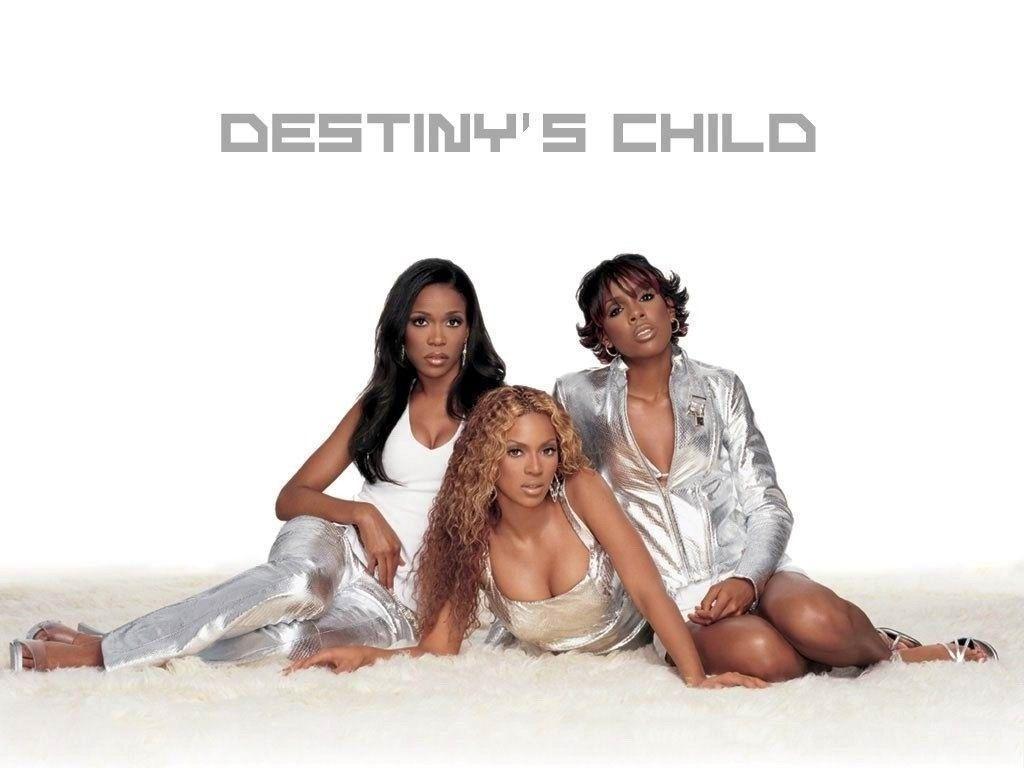
Yet the album’s public authority develops alongside an internal conflict over who possesses power within the organisation. LaTavia Roberson and LeToya Luckett dispute Mathew Knowles’s management, alleging unequal representation and control. They seek a change in management rather than the end of Destiny’s Child, but the commercial structure does not pause to renegotiate the collective. They are replaced by Michelle Williams and Farrah Franklin, and the promotional cycle continues.
This is not merely a contradiction between feminist lyrics and unfair behaviour. It reveals how completely capitalist continuity governs the group. Singles have been selected, videos commissioned and investments made. The organisation cannot allow a labour dispute to interrupt circulation. Rather than resolving the fracture, it absorbs it.
The distinction between the group as an image and the group as a workplace becomes visible. As an image, Destiny’s Child depends upon sisterhood, continuity and collective identity. As a workplace, the brand treats individual members as functions that can be replaced when they contest the structure. The collective must remain permanent even when the workers who created it are made contingent.
There is therefore no clean rupture. The original formation does not publicly end so that another can begin. The name remains intact while different women occupy the positions beneath it. The speed of replacement prevents absence from becoming politically meaningful. The machine continues before the contribution of those removed can be properly assessed.
“Say My Name” becomes the central irony of this process. The song teaches a woman to notice when behaviour has changed and to refuse an explanation that contradicts her own observation. The video then presents a visibly changed Destiny’s Child without explaining what happened to the women who had helped create the album. The product instructs its audience to investigate inconsistency while asking it to accept corporate inconsistency without investigation.
The difference lies in who controls the consequences. Within the romantic narrative, the woman can threaten to withdraw from the relationship. Within the professional organisation, members who challenge management can themselves be removed. The album teaches women to examine the contract of love just as Destiny’s Child discover that the contract governing their labour belongs to someone else.
Beyoncé’s centrality also changes meaning during this period. On the debut, her prominence could still be understood through the familiar convention of the lead singer. On “The Writing’s on the Wall”, vocal leadership begins to converge with songwriting, management and commercial authority. The hierarchy is no longer solely musical. Her ambition becomes structurally consequential, even though she remains a teenager operating inside an organisation controlled principally by adults.
The conflict should therefore not be reduced to her personality. The more difficult question concerns whether a family-managed group can distribute power fairly when the manager’s daughter is simultaneously its principal voice, emerging writer and most visible member. The success of the album makes this arrangement appear commercially rational, but commercial rationality does not make its effects equal.
“The Writing’s on the Wall” marks the moment Destiny’s Child move from being evaluated to claiming the authority to evaluate. Female authorship allows them to sound closer to their own age, while the production transforms the idiom of young Black women into one of the dominant languages of contemporary R&B. The commandments give women the right to judge money, truth, access and reciprocity, making private discomfort available as collective knowledge.
At the same time, the group’s fracture reveals the limits of this authority under capitalism. LaTavia and LeToya can identify an unequal professional arrangement, but the organisation does not have to negotiate with them. It can replace them and continue. Destiny’s Child become more powerful as a cultural voice at the precise moment individual members discover how little control they possess over the institution carrying that voice.
The album succeeds because it gives young Black women a jurisdiction they had rarely been allowed to exercise publicly. It also demonstrates that the ability to write rules does not guarantee the power to enforce them everywhere. On “The Writing’s on the Wall”, Destiny’s Child establish a law for relationships while discovering the absence of one capable of protecting the women who created it.

 Elemental Emancipation
Leave a comment