Ms. Kelly – The Reassembly
Five years separate “Simply Deep” from “Ms. Kelly”. During that interval, the musical environment that had supported Kelly Rowland’s debut changed considerably. At the beginning of the decade, R&B had occupied the centre of American popular music, providing both its dominant performers and much of its production vocabulary. By 2007, that centrality was receding. R&B remained commercially important, but fewer artists were being allowed to move from the genre into the wider pop market. The sounds survived more easily than many of the singers who had introduced them.
The American mainstream was reorganising itself around crossover pop, hip-hop and a smaller group of highly visible performers. The 2007 year-end chart was dominated by artists such as Rihanna, Fergie, Gwen Stefani, Nelly Furtado, Justin Timberlake and Timbaland, whose music incorporated R&B and hip-hop without necessarily being marketed within a restricted R&B category. Artists who could be presented as pop stars continued to benefit from Black musical vocabulary, while many singers identified primarily as R&B found the space around them narrowing.
At the same time, the industry was becoming increasingly dependent on performers who already possessed public recognition. Established stars could return through carefully constructed comeback narratives, while newer or less institutionally protected artists were expected to prove themselves more quickly. Kelly was neither a new performer nor an established solo institution. She possessed global familiarity, but her individual career had not been developed continuously enough to benefit fully from either position.
Britain was moving in another direction. The country still retained the affection for Kelly established during “Simply Deep”, but its musical centre was also becoming more electronic. Dance music had long circulated more freely within the British mainstream than it did in the United States, and by the second half of the decade the separation between club music and pop was becoming increasingly porous. Calvin Harris entered the British Top 10 with “Acceptable in the 80s” in 2007, while producers, remixers and DJs were beginning to acquire identities comparable to those of the singers appearing on their records.
Kelly therefore returned to two markets undergoing opposite forms of change. In the United States, the R&B identity constructed around her was losing access to the broadest commercial space. In Britain, electronic music was creating a new route through which an R&B-trained voice could enter pop.
The period was also marked by a form of territorial album-making that now appears unusual. Labels did not always release the same album internationally. They could retain the strongest material from one version, add new recordings and reconstruct the project according to the perceived expectations of another market.
Natasha Bedingfield offers the clearest parallel. Britain and Europe received “N.B.” in 2007, but its delayed American release was rebuilt as “Pocketful of Sunshine” the following year. The North American album retained six songs from “N.B.” and added seven new recordings, receiving a new title that acknowledged the extent of the transformation.
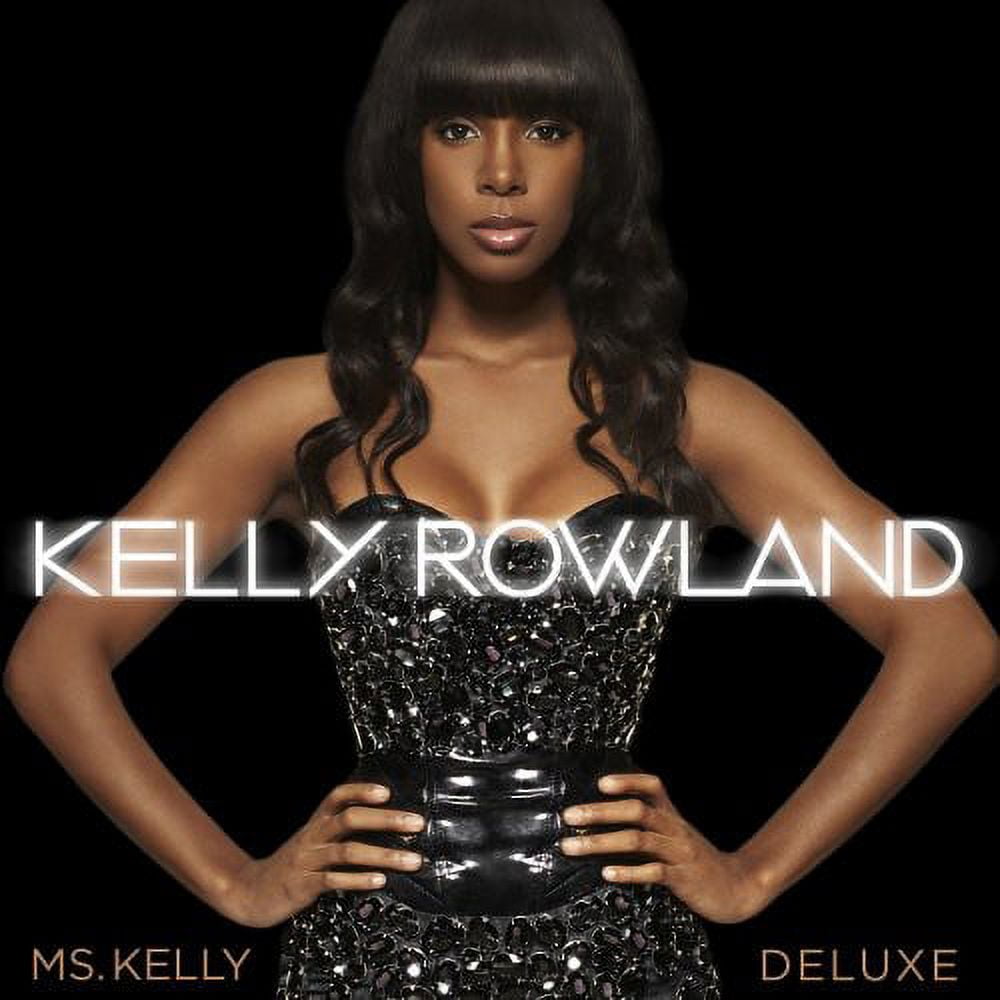
“Ms. Kelly” followed the same industrial logic in reverse. The United States received the original album in 2007. Britain and Europe initially received that version as well, but after “Work” became a hit, the project was substantially reconstructed. Unlike Natasha Bedingfield’s album, Kelly’s replacement retained the same title. The term “deluxe edition” suggested that the original record had simply been expanded, when Britain was effectively being offered another album assembled from its remains.
The original American “Ms. Kelly” presents Kelly as an adult R&B woman. Its title abandons the adjective used by “Simply Deep” and replaces it with her own name, preceded by the more formal “Ms.” The implication is maturity, autonomy and self-possession. Kelly is no longer being introduced through sensitivity. She is expected to define herself.
This version opens with “Like This”, featuring Eve, before moving into “Comeback”, “Ghetto” and the original version of “Work”. The sequence places Kelly inside the American urban market, surrounding her with hip-hop features and production associated with contemporary R&B. The woman being presented is confident, sexual and socially assured. She is not asking to be welcomed. She is announcing that she has returned.
The European reconstruction proposes something broader. It preserves Kelly as an R&B performer: “Like This” and several songs from the original edition remain, while club music occupies only a limited part of the record. Its real transformation is positional rather than purely musical. Kelly is recast as an international pop vocalist whose identity can survive movement between R&B, dance music and melodic crossover pop.
The difference is established immediately through sequencing. The reconstructed album begins with the Freemasons remix of “Work”, followed by “Daylight” and then “Like This”. The American lead single is preserved, but it no longer introduces the project. Before the listener encounters Kelly as an R&B artist, she has already appeared through electronic dance music and live-band crossover pop.
This Kelly is not defined by one musical community. Her polish, restraint and recognisable voice become the links between several forms of popular music. The European album assumes that the public’s attachment is to Kelly herself, rather than to a particular sonic category.
The original “Ms. Kelly” is a polished R&B album built largely from midtempo songs, ballads and a small number of harder rhythmic tracks. It reflects the long development process that began when the project was still titled “My Story”. The album is more focused than “Simply Deep”, but some of its production already feels tied to a commercial period approaching its end.
Its most immediate songs, particularly “Like This”, “Comeback” and “Work”, attempt to give Kelly the rhythmic authority implied by the title. Elsewhere, the album repeatedly returns to emotional R&B, preserving the measured vocal style that had always distinguished her.
“Work” becomes the point at which the two albums separate. In its original Scott Storch production, Kelly’s vocal is clipped, repetitive and commanding. She instructs a prospective partner to demonstrate his value, turning attraction into a test of effort. The song already contains the strongest performance on the album because Kelly uses restraint as authority. She does not need to raise her voice to control the record.
The Freemasons remix changes the environment around that performance. Its faster tempo transforms Kelly’s short phrases into propulsion, while the electronic production supplies the excess that her voice deliberately avoids. Rather than fighting the arrangement, she remains composed above it. Her clarity prevents the track from becoming anonymous, while her precision allows the beat to continue without interruption.
This is Kelly’s first major hit through a dance record. It establishes that her voice possesses a particular usefulness within electronic music. She can give a producer-led track warmth and personality without slowing its movement. Over the following years, “When Love Takes Over”, “Commander”, “What a Feeling” and “Down for Whatever” would turn this discovery into a substantial part of her international identity.
However, the reconstructed “Ms. Kelly” is not built entirely around that sound. Its importance comes from combining the dance breakthrough with new pop and R&B material. “Daylight” places Kelly within a brighter live-band arrangement, while “Unity” returns to the melodic emotional language that had connected with British audiences on “Simply Deep”. The album accommodates the electronic Kelly without reducing her to it.
This is why “Unity” matters. It suggests that the British market did not simply want Kelly in clubs. It still valued the warmth, sincerity and broad emotional accessibility that had made “Stole” successful. The reconstructed album combines these qualities rather than choosing between them.
The earlier record consequently becomes raw material. Songs that remain useful are retained, while others disappear or are replaced by new recordings and remixes. The result is not the original “Ms. Kelly” with supplementary tracks at the end. It is a new sequence with a different opening, emotional rhythm and commercial centre.
The American edition is more specific in its construction of Kelly’s adult life. Its lyrics move between self-assertion, sexual confidence and unresolved attachment. “Like This” and “Comeback” establish status, while “Ghetto” and “The Show” place her within recognisably American narratives of attraction and sexuality. “Still in Love with My Ex” and “Flashback” retain the confessional intention of the abandoned “My Story” concept.
This gives the original album a clearer social environment. Kelly is not merely singing about love in the abstract. She is negotiating adulthood through desire, memory and disappointment. The title “Ms. Kelly” suggests control, but several of the songs reveal that maturity has not eliminated emotional uncertainty.
The reconstructed album removes much of this specificity. Several of the songs most closely connected to the autobiographical and sexually explicit dimensions of the original project disappear, while new material such as “Broken”, “Love Again”, “Unity” and “No Man No Cry” favours emotions that require less narrative context.
The European album therefore makes Kelly more transferable. Its emotional language is broader and more immediate, allowing her voice to communicate loss, resilience and romantic renewal without locating those feelings within a particularly American social world.
This broadening corresponds with her developing role in electronic music. Dance records often require emotion to be condensed into a direct hook capable of surviving repetition. Kelly’s vocal style already works through control and clarity, making her particularly effective at transforming uncomplicated phrases into emotional release.
The reconstructed album begins to remove the distance between her two strengths. She can remain the thoughtful singer Britain had embraced while learning to express that sensitivity through music built for collective movement.
The original campaign initially followed the American album’s positioning. “Like This” introduced a mature, fashionable and socially confident Kelly, supported by Eve and surrounded by the visual language of mid-2000s urban pop. “Ghetto” reinforced the album’s connection to American R&B, while “Comeback” presented her return as a statement of personal value.
Yet the campaign did not produce a sustained narrative. The original album arrived in Britain in 2007, but its limited commercial response suggested that affection for Kelly had not automatically transferred to the new material. The audience remained available, though the album had not yet found the song capable of reorganising that relationship.
The Freemasons remix gave “Work” that function. Sony promoted the remixed version with its own video, allowing the new arrangement to become the recognised public form of the single rather than a specialist club alternative. Once it succeeded, the remix did not merely extend the campaign. It provided the basis for restarting it.
The reconstructed edition followed in May 2008. Apple Music currently lists the British deluxe version as a fifteen-track album running for more than an hour, distinct from the original twelve-track American edition. Its physical release received its own catalogue number and chart entry, confirming that it circulated as a separate commercial object rather than only as a digital collection of bonuses.
The original “Ms. Kelly” performed more strongly in the United States than its later reputation sometimes suggests. It debuted at number six on the Billboard 200, Kelly’s highest studio-album entry in the country at the time. However, that opening did not lead to a durable crossover campaign. The album confirmed the existence of an American audience for Kelly without reversing the broader contraction affecting many R&B artists.
Britain initially reacted more cautiously. The original album reached number 37, a considerable decline from the number-one debut of “Simply Deep”. The title alone could not recover the relationship established five years earlier.
“Work” changed the direction of the era. The Freemasons-led release reached number four in Britain, spent six weeks inside the Top 10 and remained on the singles chart for 26 weeks. Its longevity showed that the result was not merely the brief curiosity generated by a remix. British audiences accepted Kelly’s movement into dance music and continued supporting the record long after its peak.
The reconstructed album subsequently entered the UK chart at number 23, higher than the original edition, although its chart run remained brief. Its importance was therefore not that it transformed “Ms. Kelly” into a major album seller. It established which version of Kelly the British market intended to carry forward.
“Ms. Kelly” is the point at which Kelly Rowland’s career separates geographically.
The United States receives an adult R&B album that performs respectably but cannot restore the genre’s former mainstream power around her. Britain receives that album, rejects its initial form, turns one of its tracks into a dance hit and is then offered a second project built from the surviving material.
The reassembly does not resolve Kelly’s identity. It reveals that she can sustain more than one. In the United States, she remains connected to sensual contemporary R&B, a direction that will later produce “Motivation”. In Britain and Europe, “Work” begins her transformation into one of the recurring female voices of electronic pop.
This role gives Kelly a new durability. As R&B loses space, she acquires access to a musical economy expanding across national borders. Her voice becomes recognisable within records led by producers and DJs, allowing her to remain commercially present even when her own album campaigns lack continuity.
There is nevertheless an ambiguity within that success. Kelly becomes central to electronic music without immediately receiving an album fully organised around that position. Individual collaborations and remixes often understand her more clearly than the projects released under her own name.
“Ms. Kelly” does not simply receive a deluxe edition. It is dismantled and built again.


 Elemental Emancipation
Leave a comment